Author: factoid

Logistics, mechanics, acoustics

The ferns – Finishing the remodel

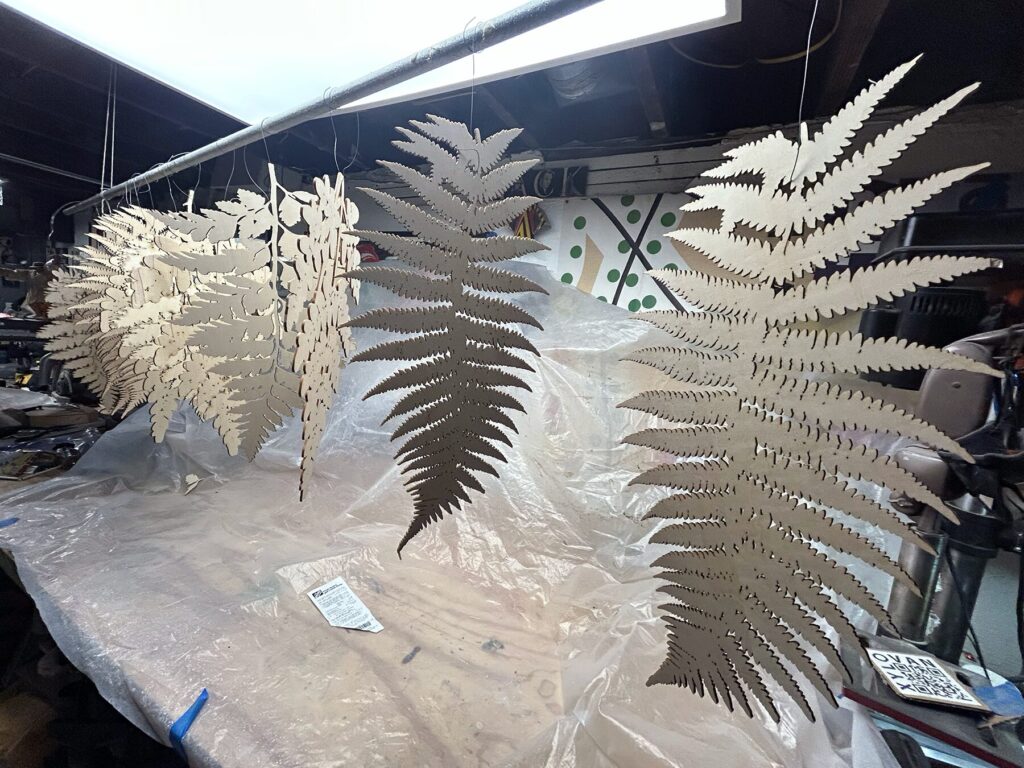
I worried when I started this final phase of our 2nd-floor gut-remodel that my lighting plan was going to look corny or fail structurally. Now that it’s installed, I like the way it turned out.

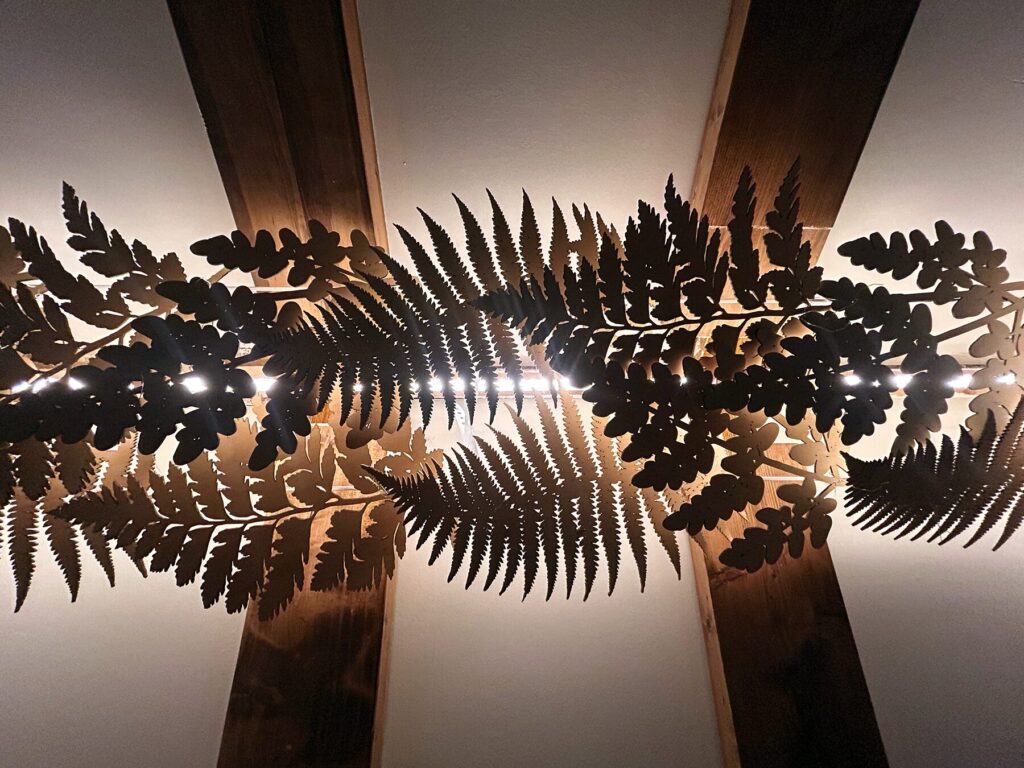
When I designed the remodel, I figured that we would want recessed, dimmable lighting of some kind that comes on when you hit a switch at the bedroom entrance, so I installed LED strip lighting along the spine of the room, with plan to cover it with shapes to diffuse it and help it bounce.

Our move to the Pacific Northwest in 2021 sent us on dreamy hikes with the dog through the lush, green parks of Seattle, which then inspired the design.

The ferns are each about 18″ long, laser-cut, clear-coated, and hung with zinc wire from steel rails that I suspended from the rafters on straps of plumber’s tape. I painted the metal white to help it disappear and blend in.
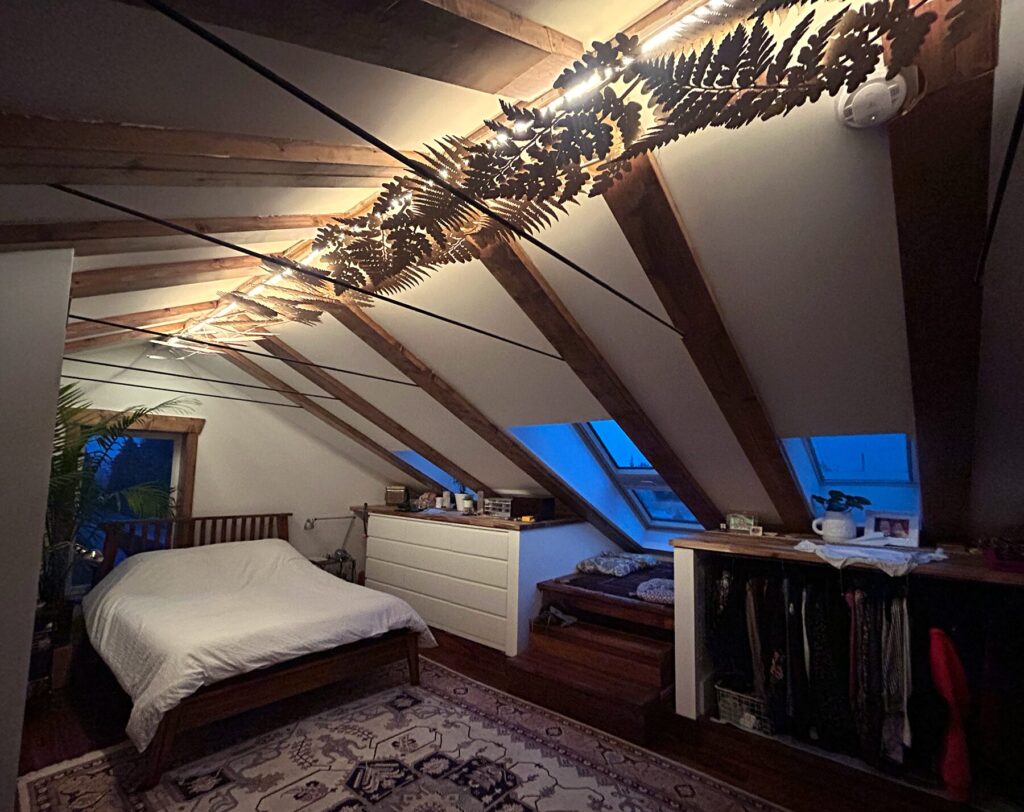
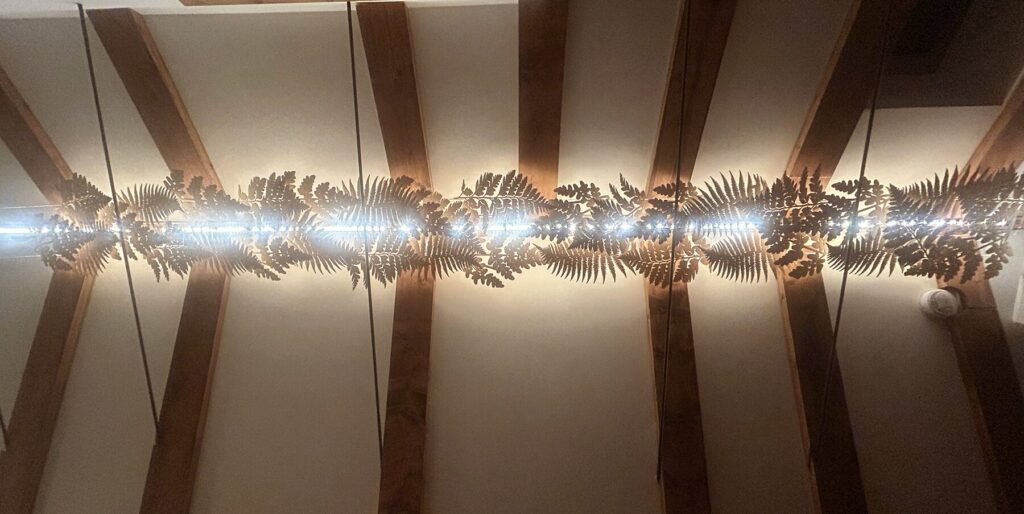
Clear-coating will, I hope, preserve them from gathering too much dust.

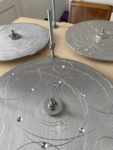
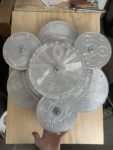
Old->New gong array

The trick with scrap-aluminum gongs is that you just can’t tune them.

So I built this basic array by ear (back when I decommissioned XyloVan), choosing disc gongs that would resonate well together.

This past month, I upgraded the whole thing to get it ready for visitors to Seacompression to bang on and enjoy.

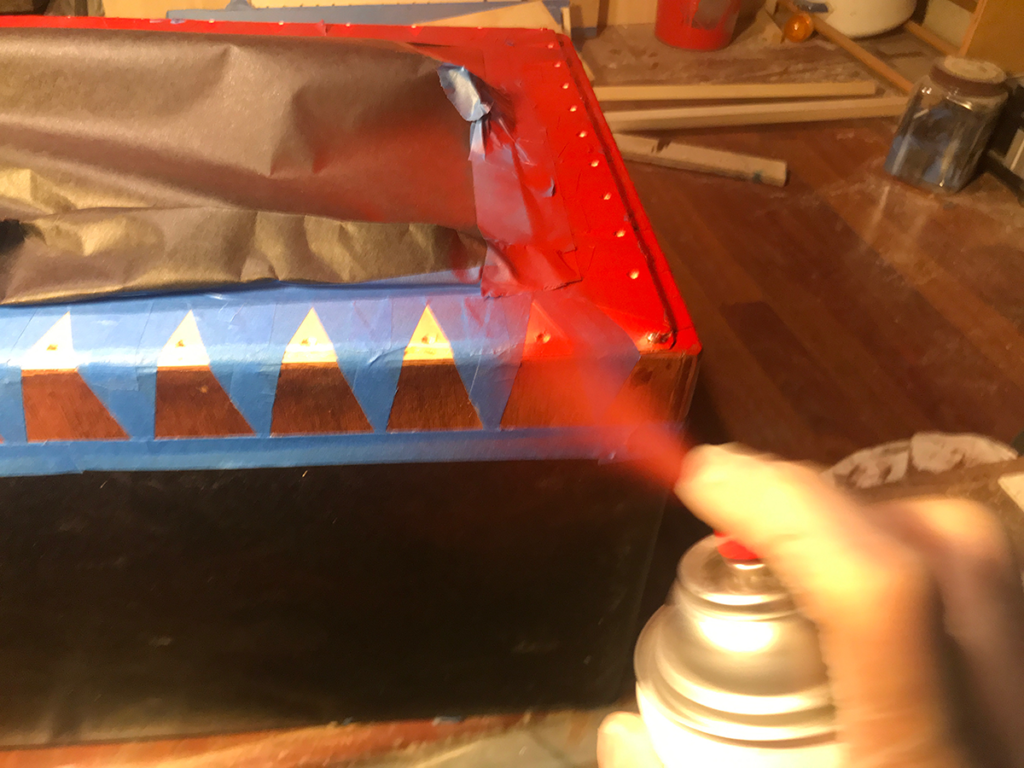
Weather had beaten the crap out of the backboard while it lived on our rooftop in Brooklyn (site of my many nighttime courtyard gong serenades), so I gave it a fun paint job.

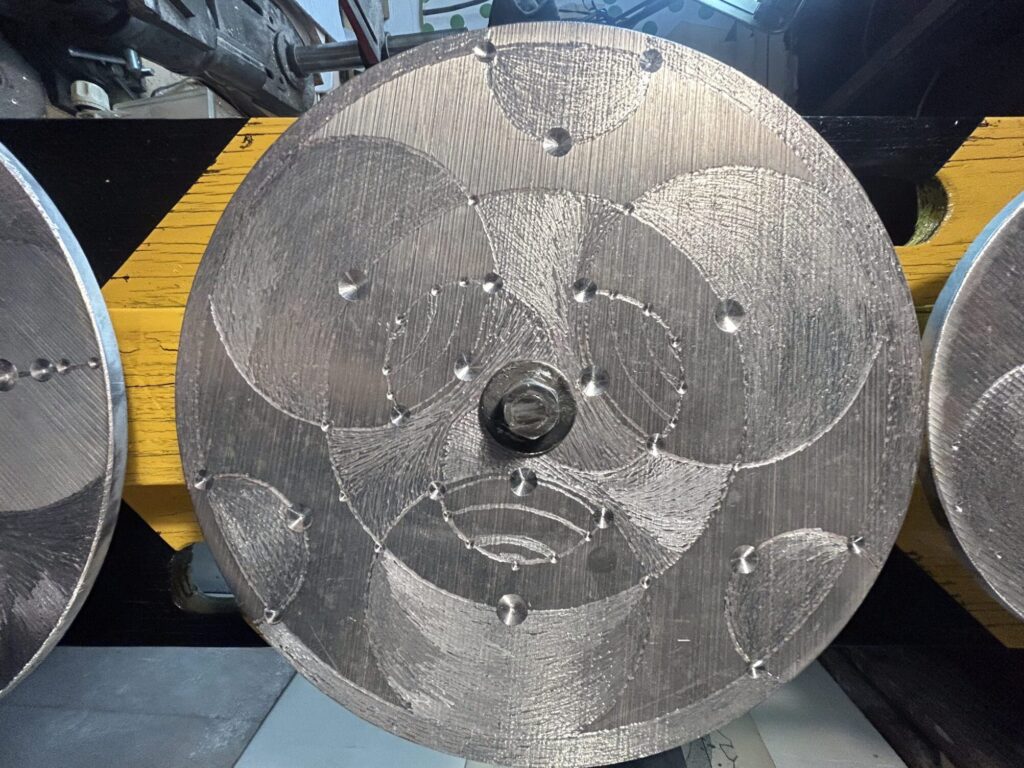
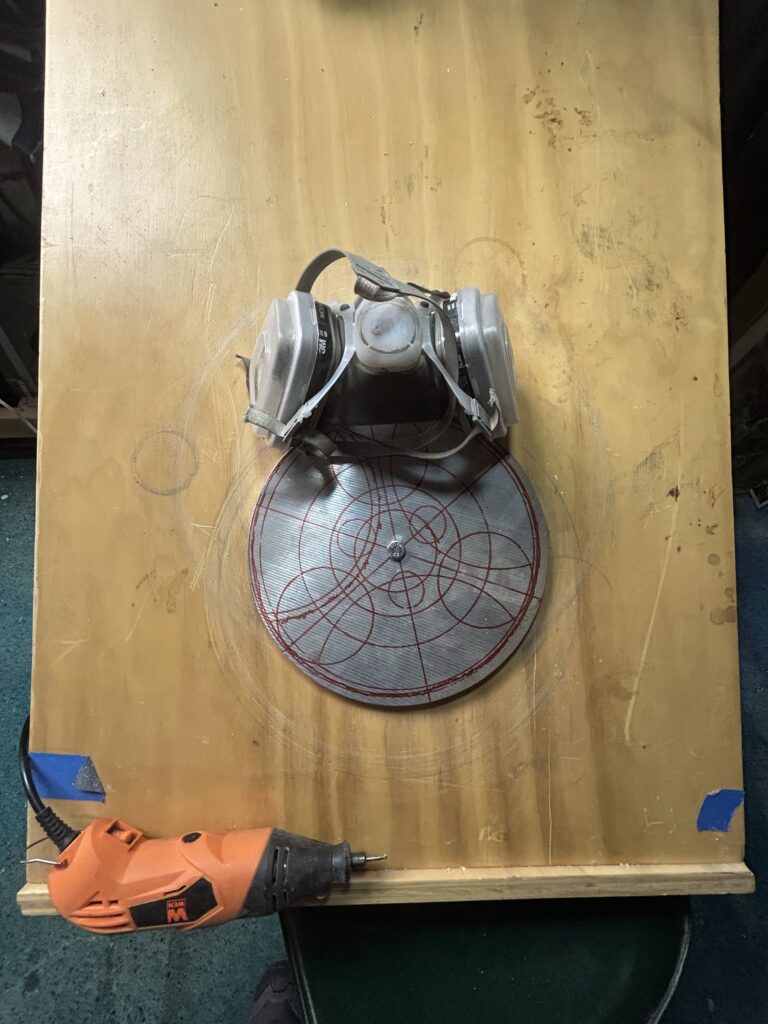
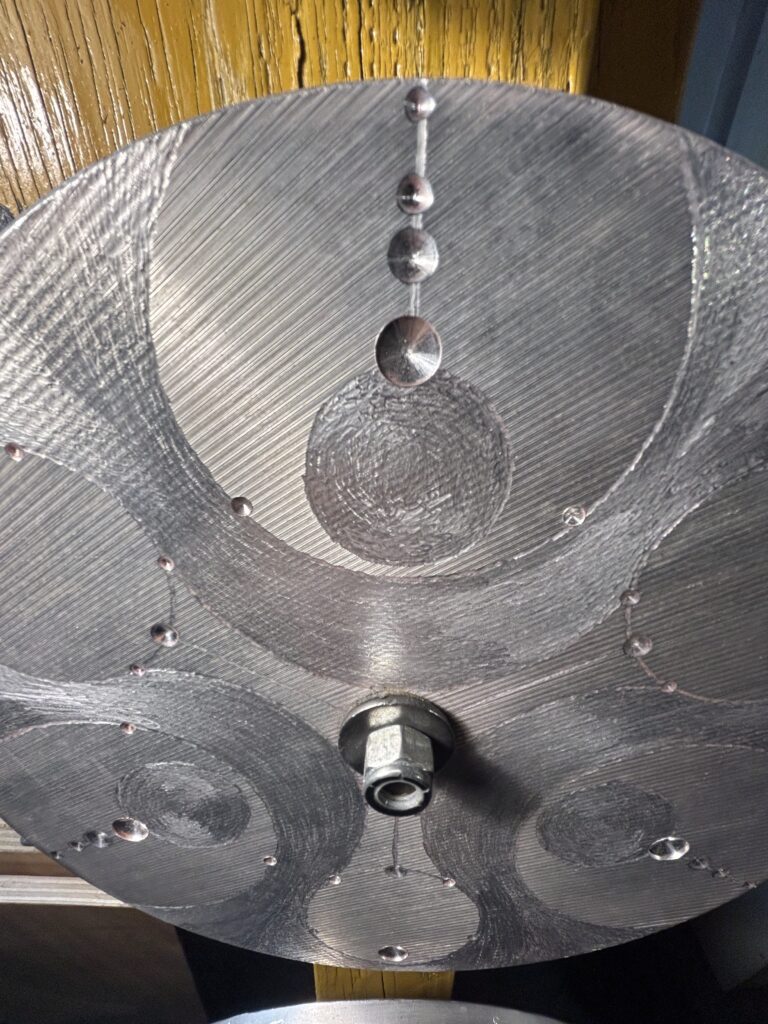
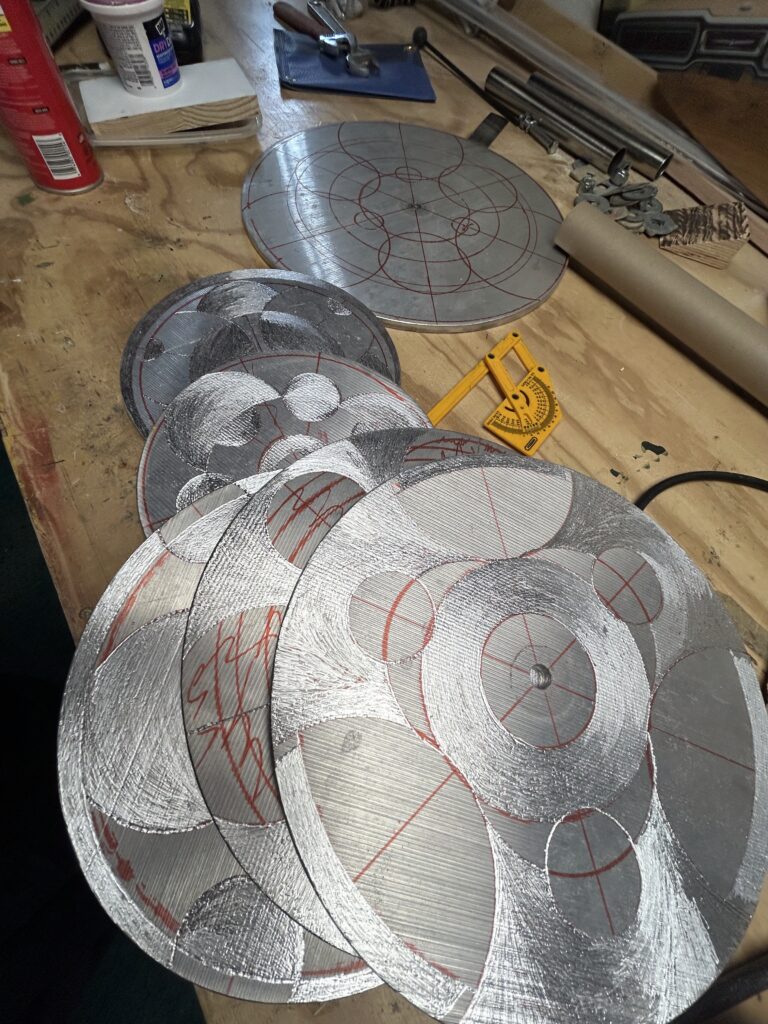
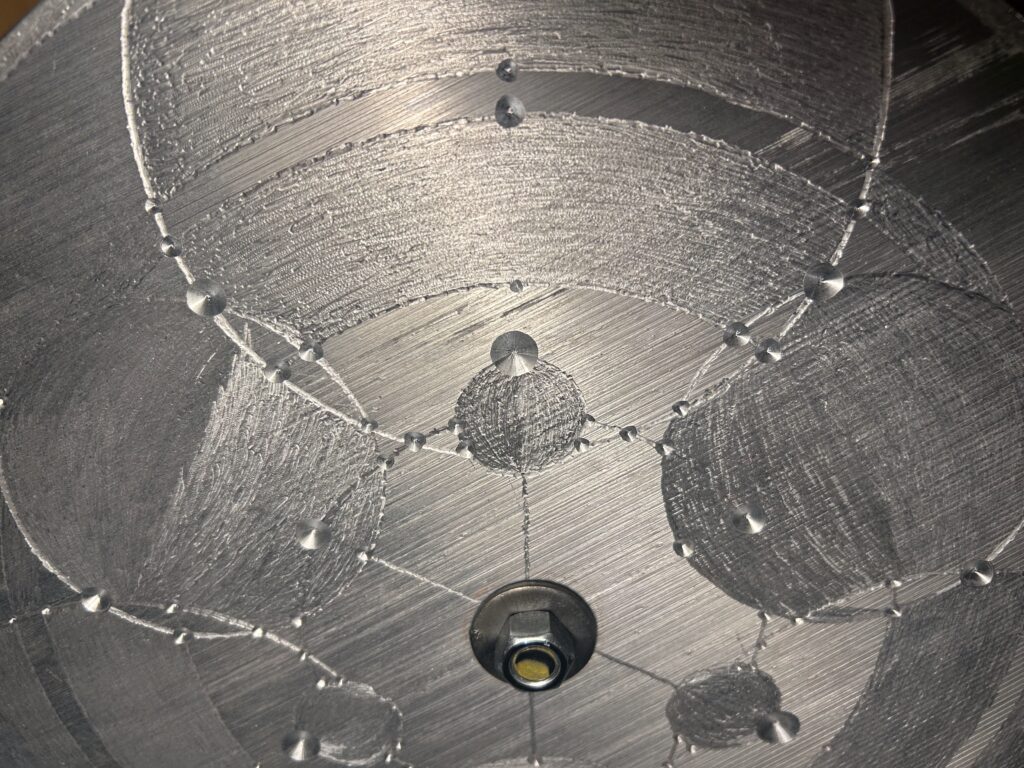
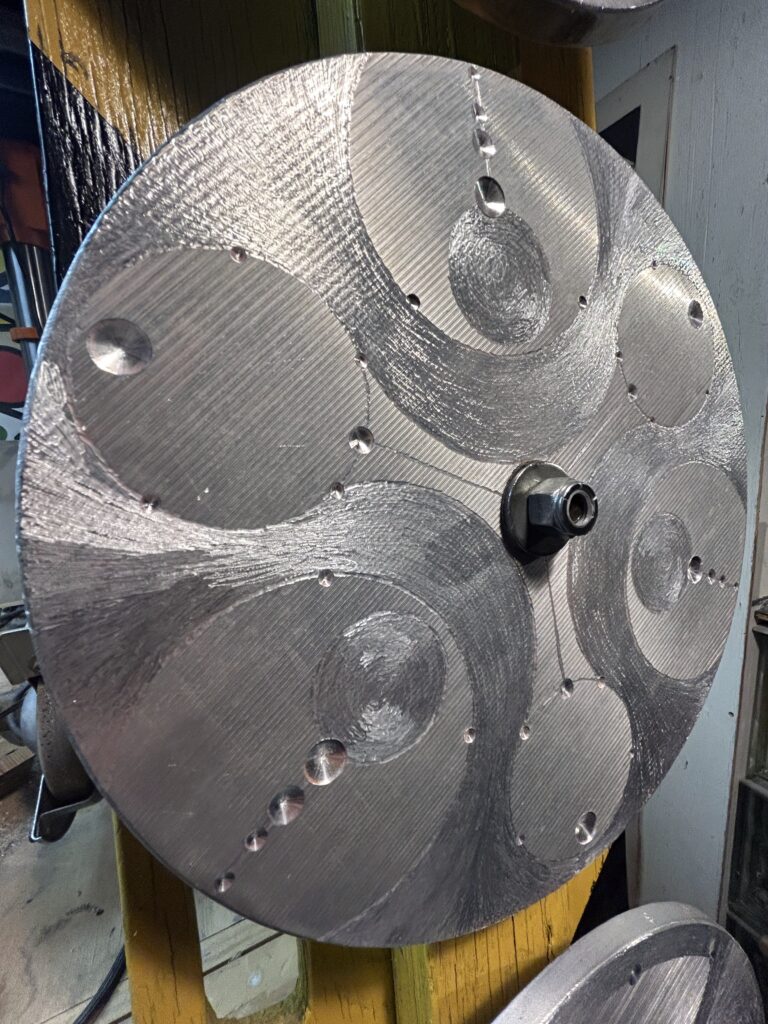
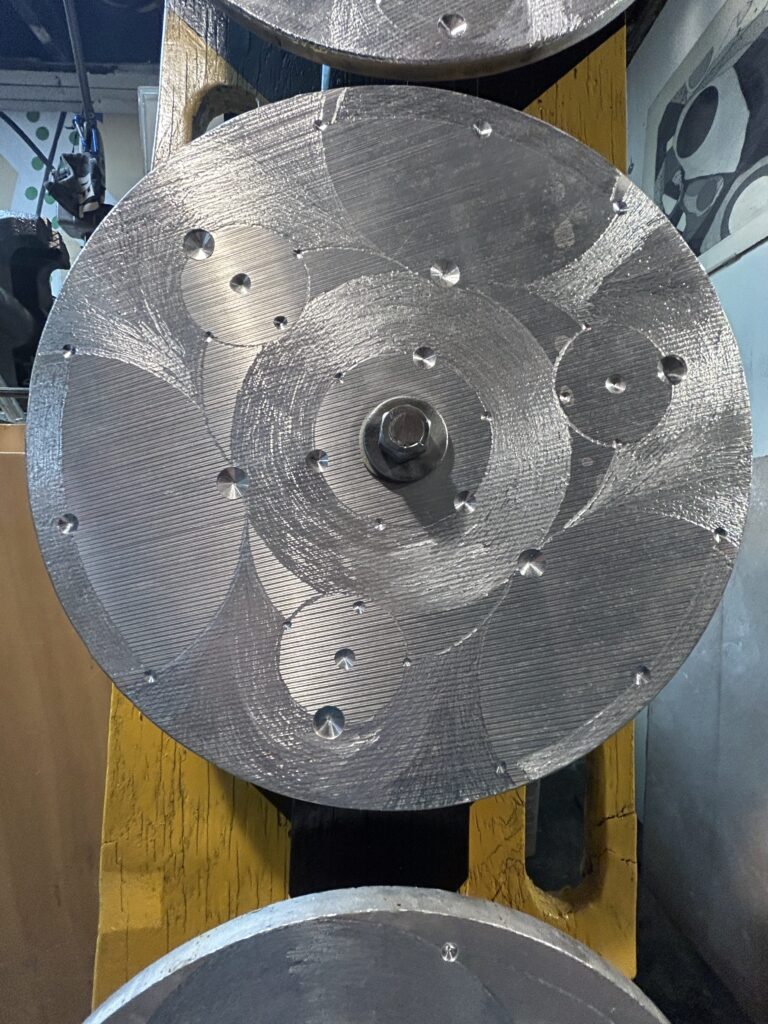
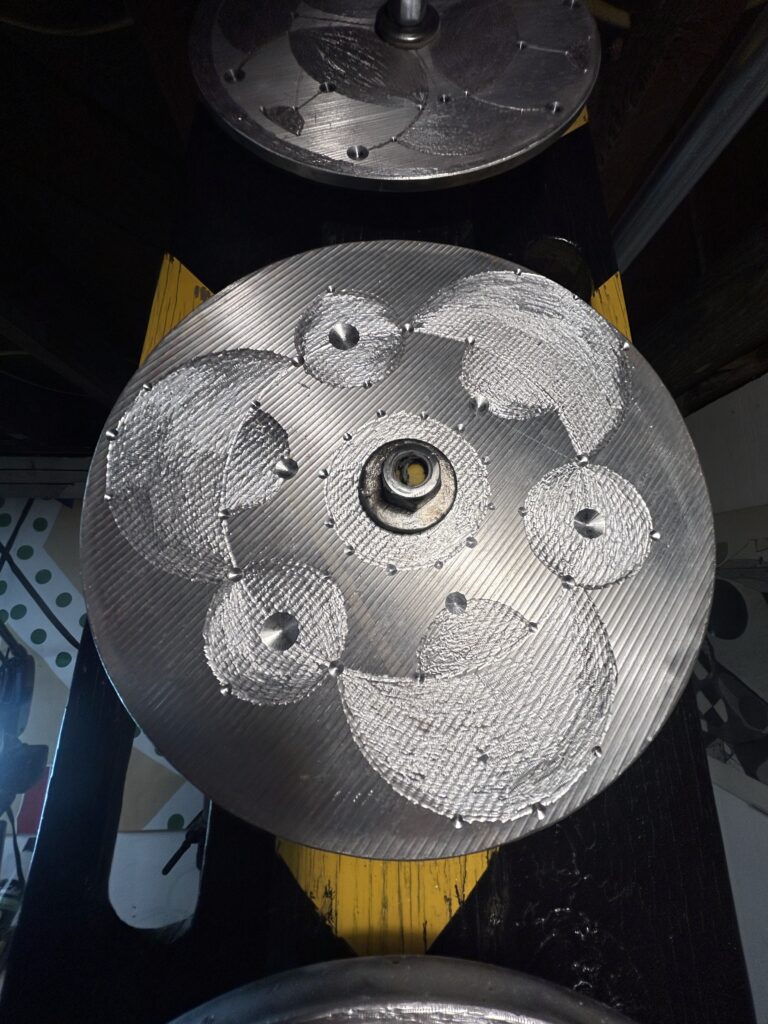
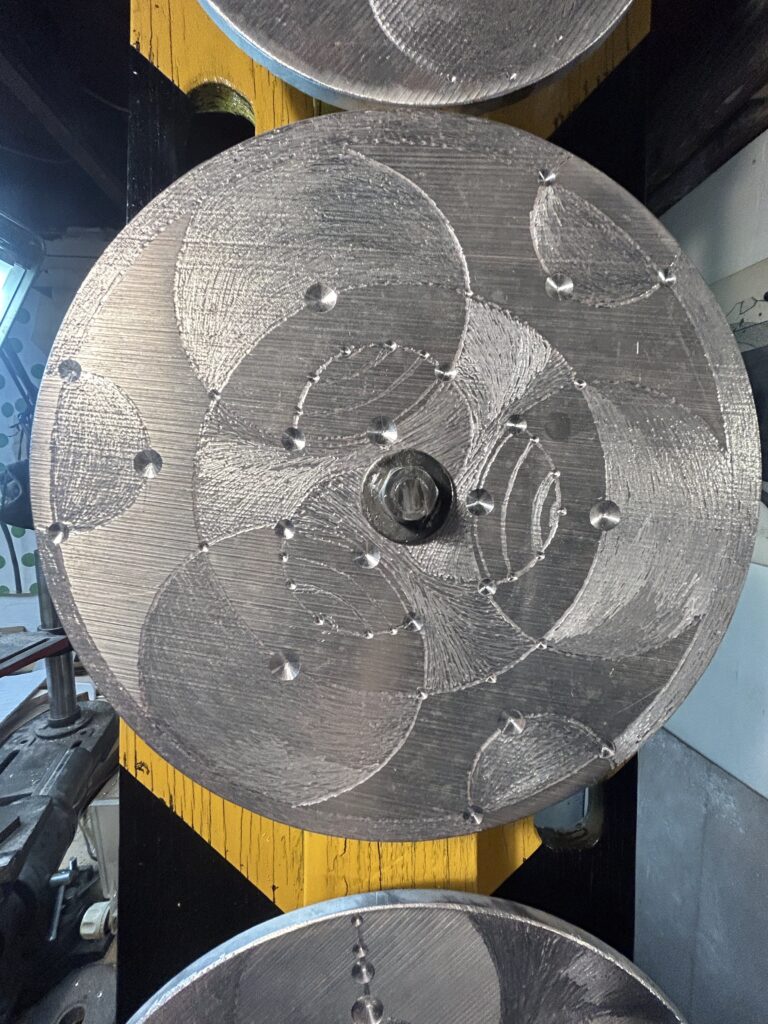
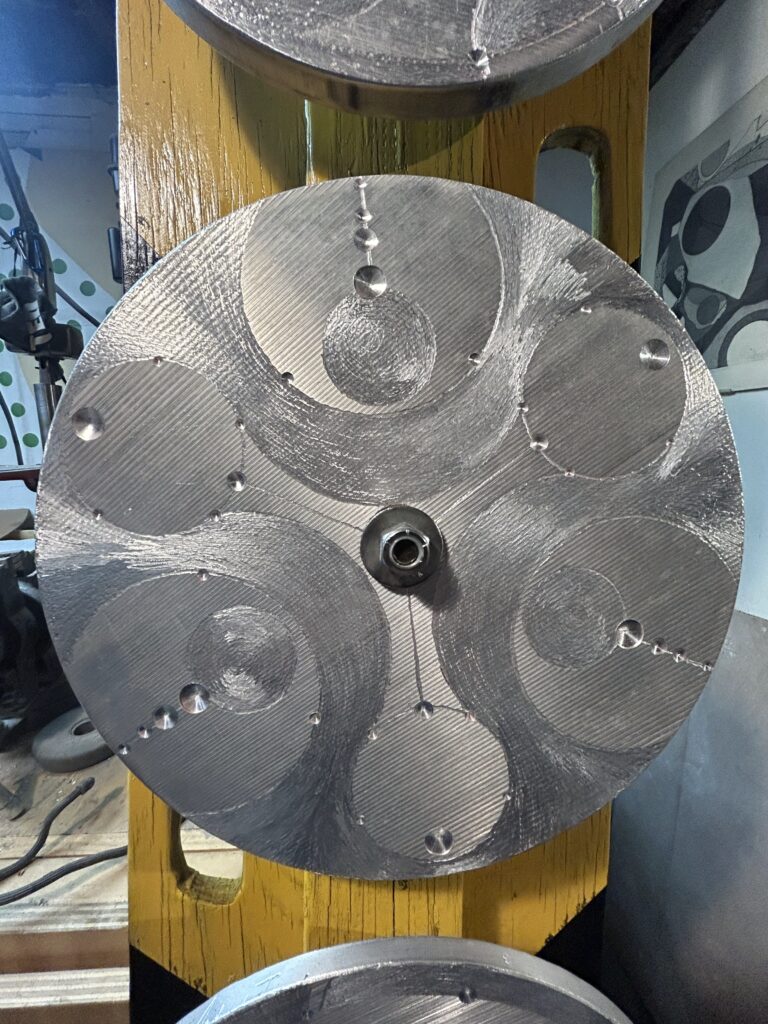
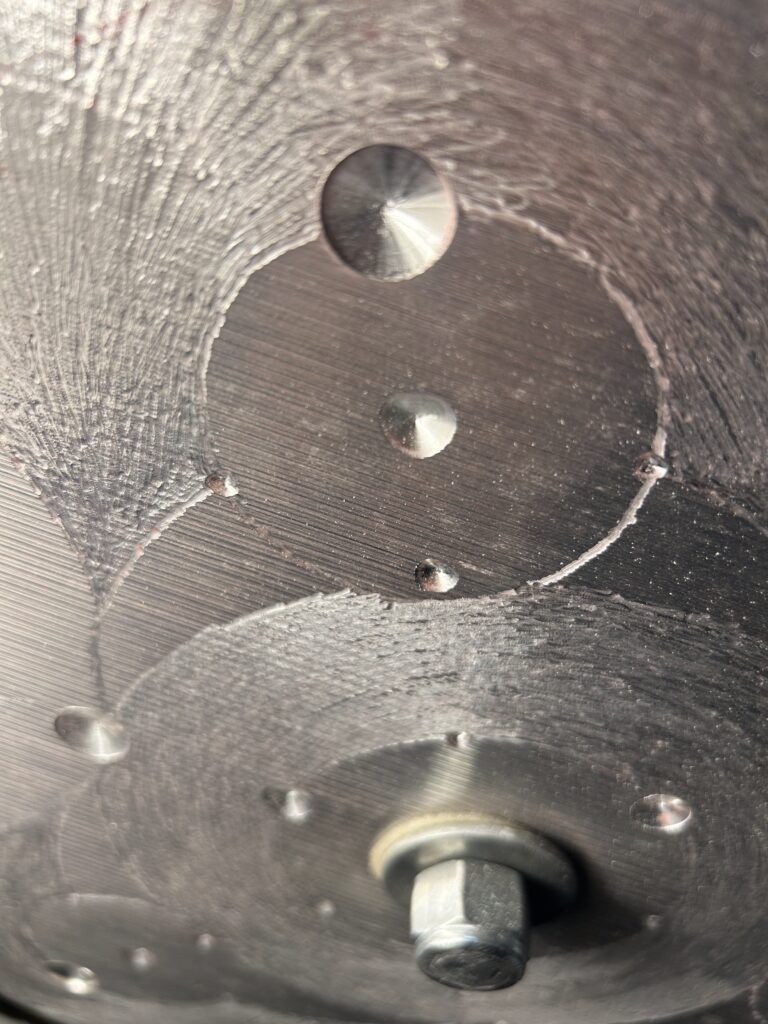
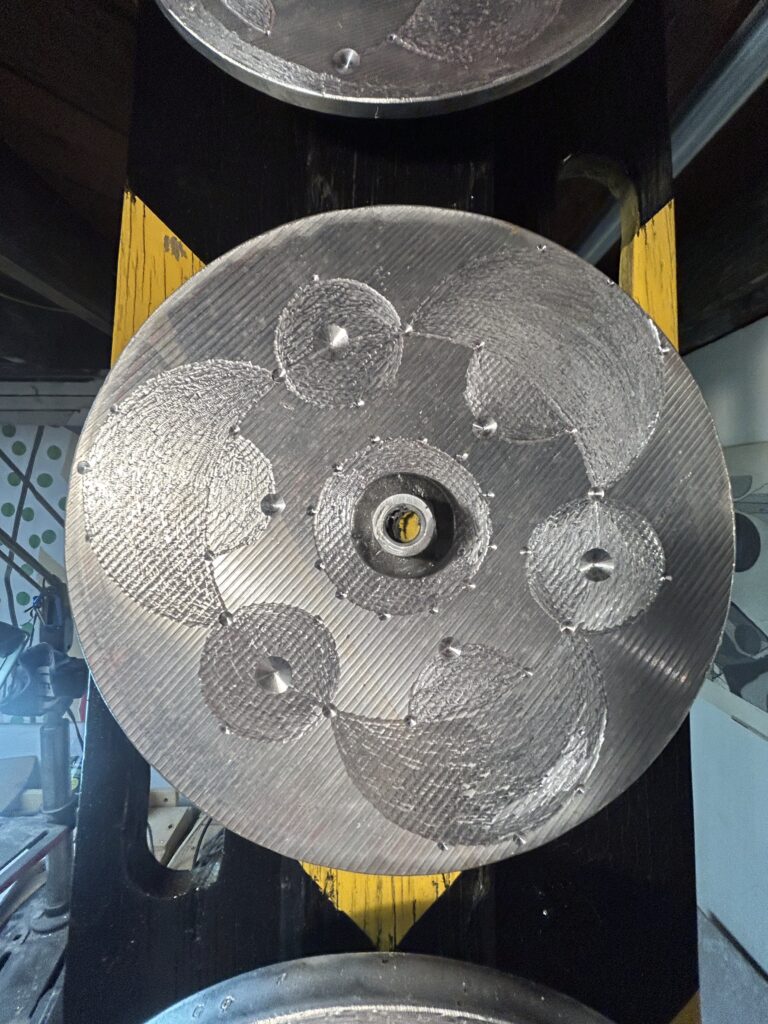
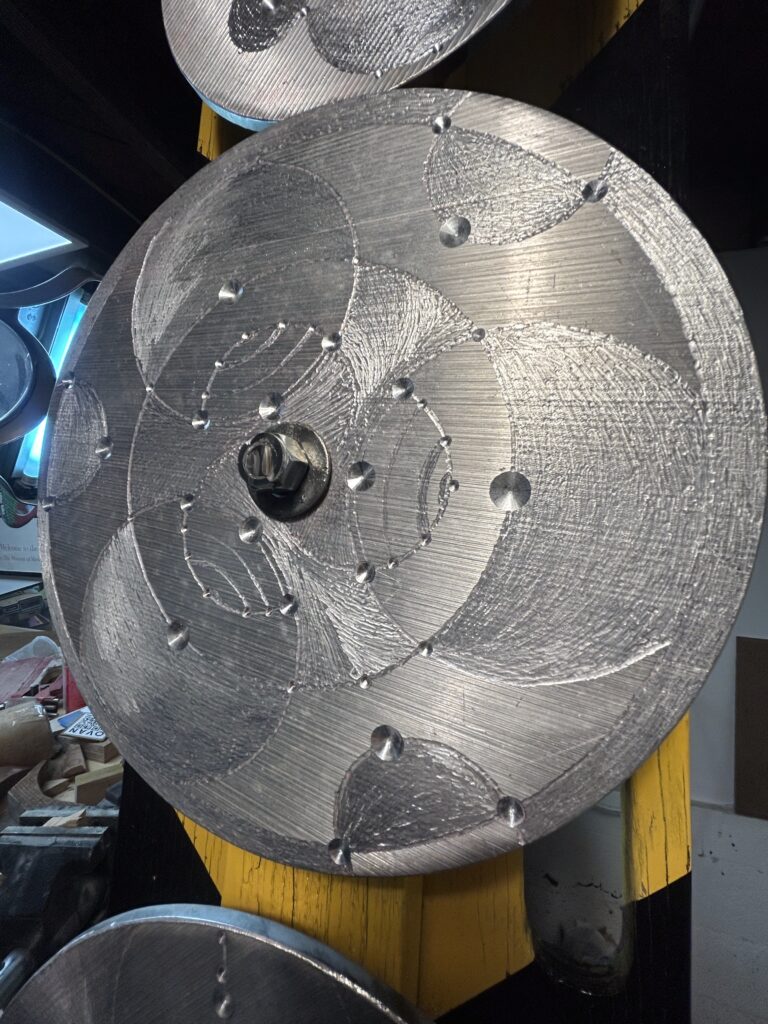
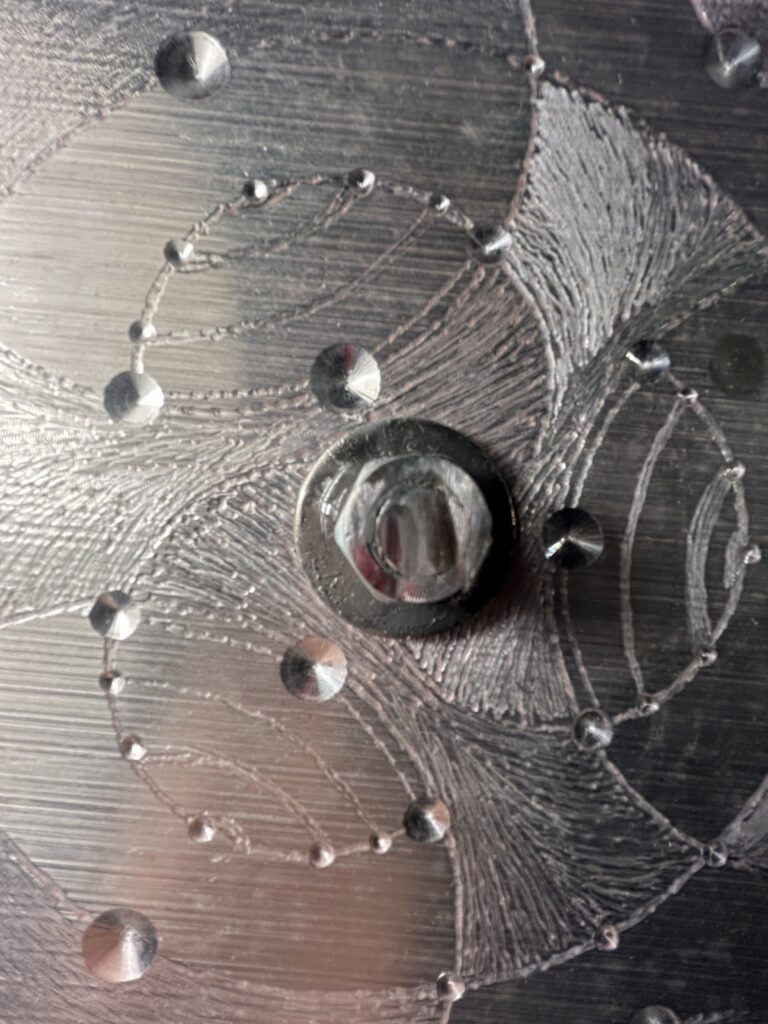
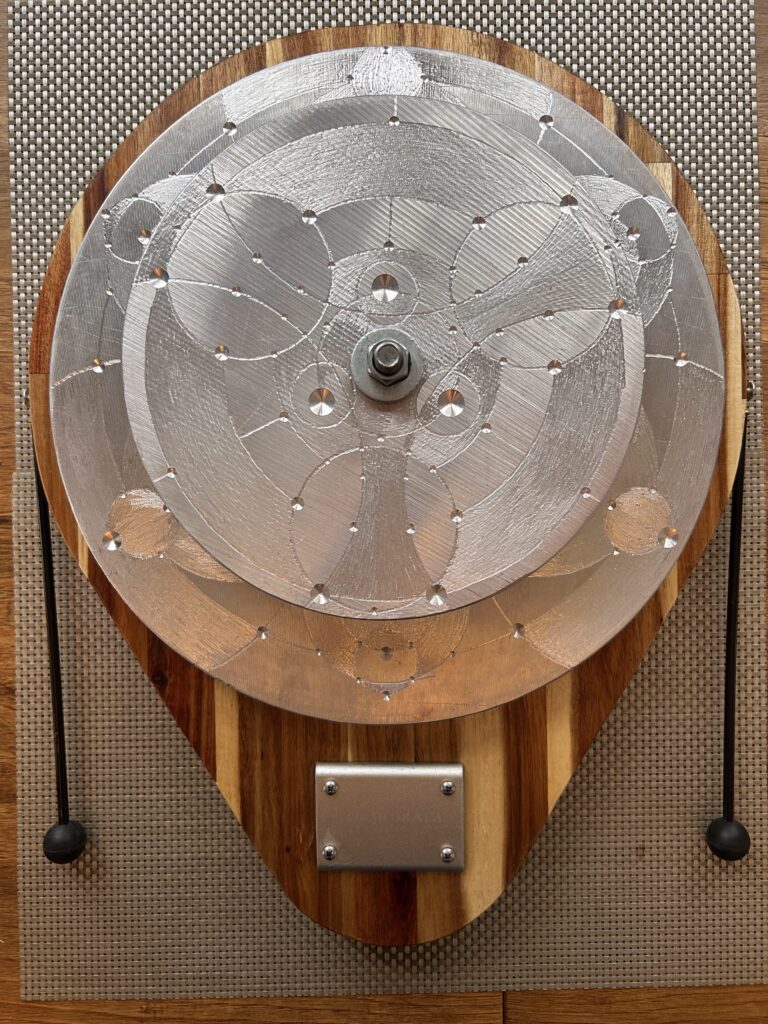
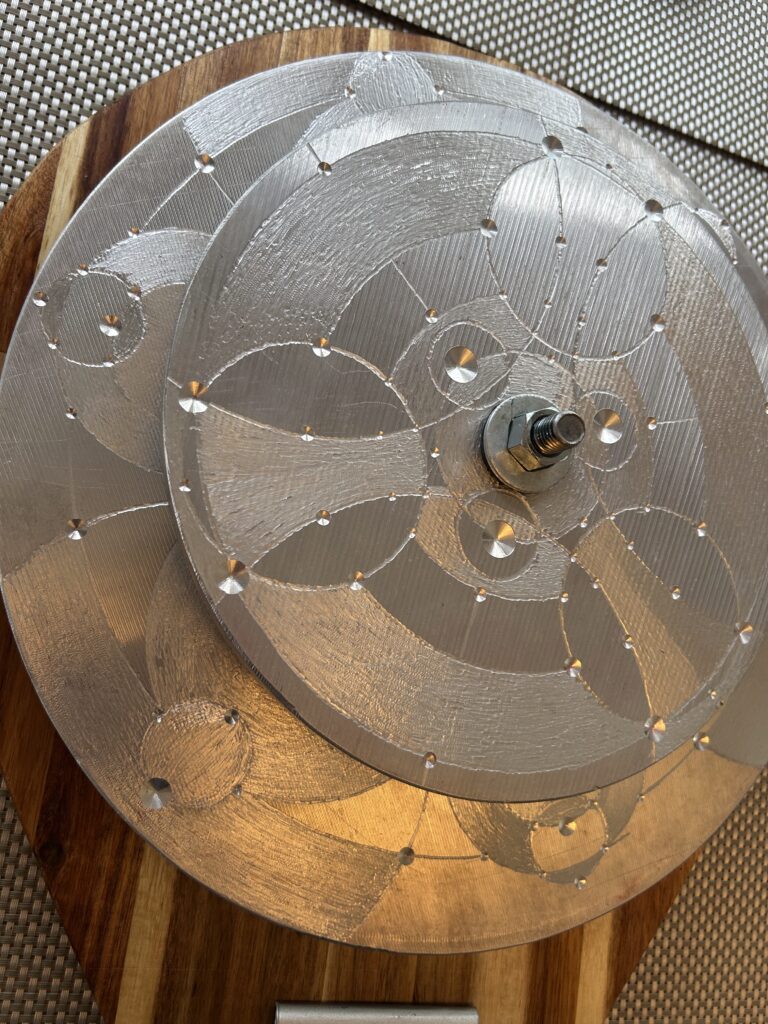
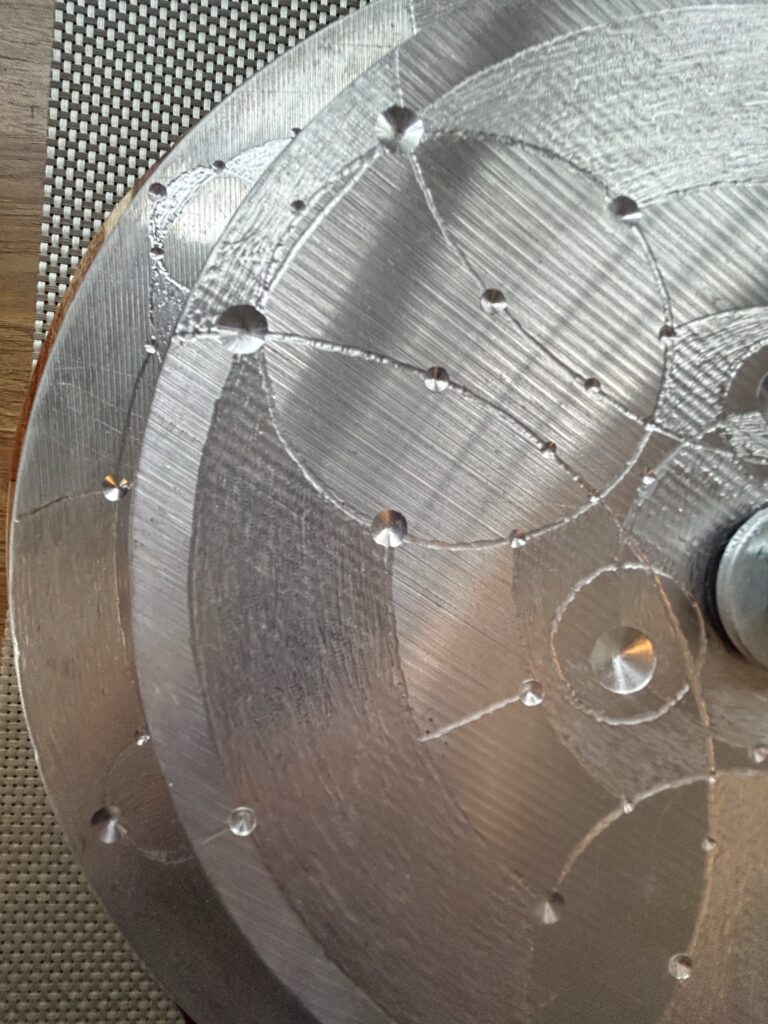
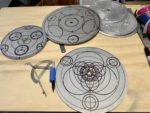
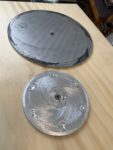
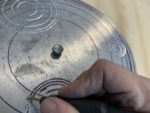
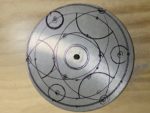
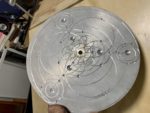
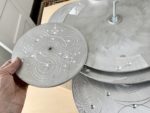
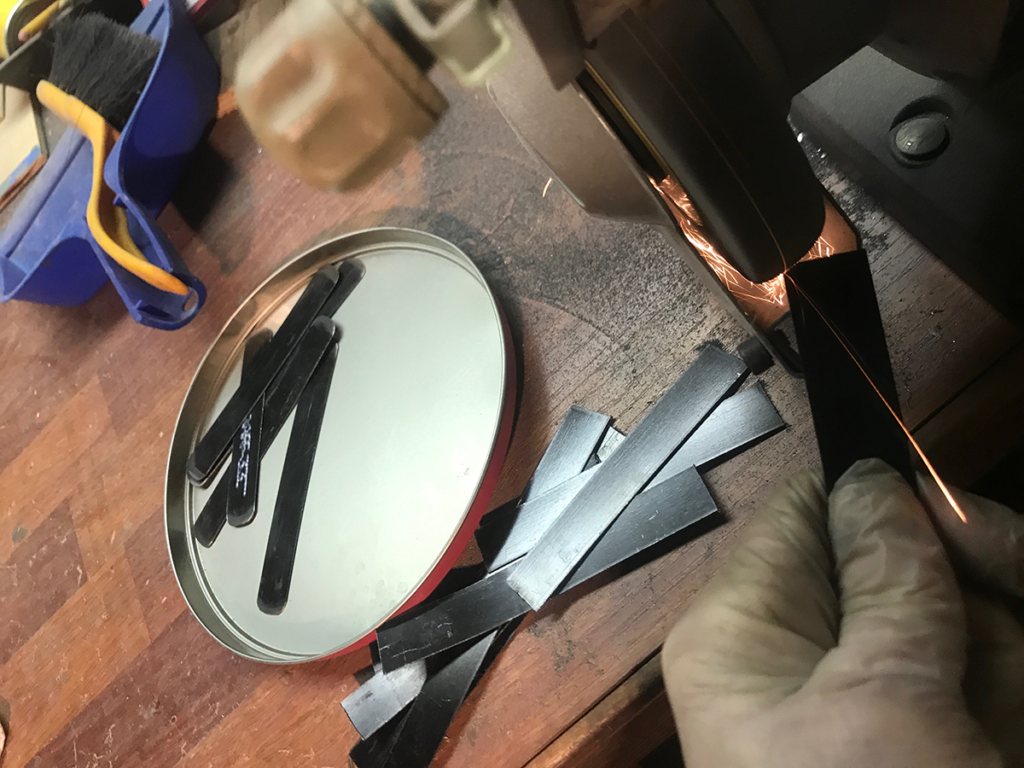
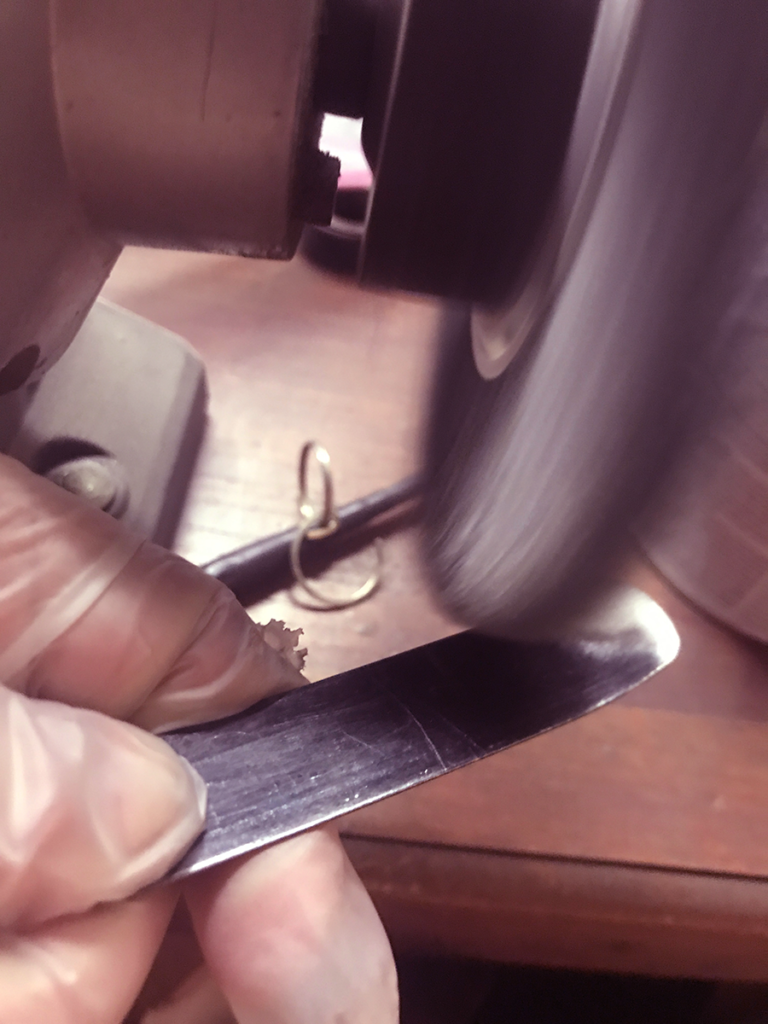
And I engraved all 7 of the otherwise dull chunks of metal, using a 1/16″ burr bit on my Dremel for the lines and shading, and then a series of drillbits for the points, all of which … took a few hours.

I’m pretty happy with how it turned out.

A gift

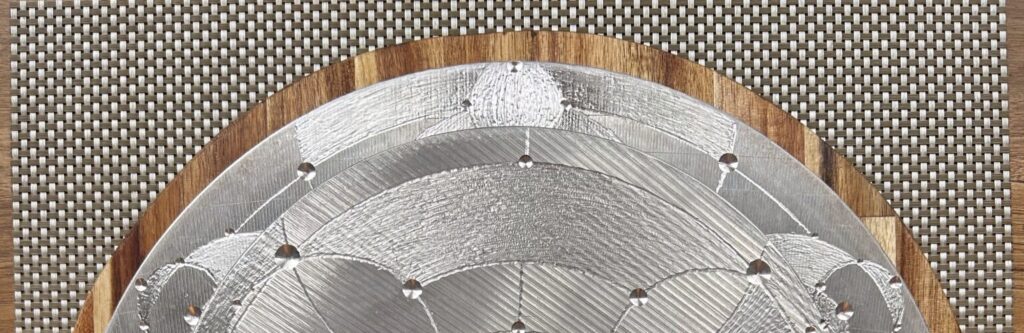
I spent quite a few hours finishing this for Jack, the big, friendly genius/nice guy of a home builder who finished the last major step of our 2nd floor remodel this afternoon. I engraved two gongs that sound good together, mounted them on a chunk of the butcher block that I milled from scrap left over from the countertops, and laser etched the plate to say:

With my deepest thanks
to
Jack Medrala
Homebuilder
Gentleman
Hero

He earned this; He got us through hell, and we love living here on the other side of it now (see earlier posts) thanks to his skill, moxie, and hard work. We love the guy and would recommend him to anyone.

Rebirthing the XyloVan gongs

Long, long ago, in a city far, far away (2010, Los Angeles), I made this crazy thing with the help of my loving and endlessly tolerant family.

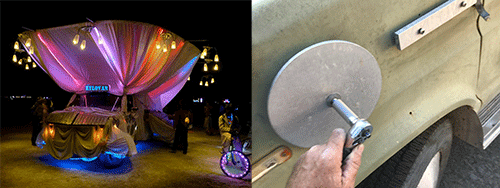
XyloVan – the only musical instrument I know of that got 8 miles a gallon downhill in a tailwind – played and ran for many years at Burning Man and various like-minded creative events and venues, and many thousands of people enjoyed playing on its instruments and generally making happy noise.

In 2019, with much excitement, we moved to New York City – which meant that, with much regret, I had to sell the vehicle, unmount all the instruments to put them into storage, and move on to a new phase in our lives together.

We moved to Seattle in 2021 and this year, I finally got tired of tripping over this set of scrap-aluminum gongs (which I had stripped off of the van and rearranged in this array four years earlier in a fit of creative frustration in NYC) and decided to share them with the world again.

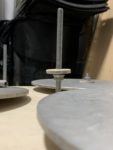
So here they are, mounted on one of our flowering plum trees (carefully, so as not to hurt the tree!)

We’re also planning to bring the xylophones up from storage in L.A. and mount them in the front yard for all to play. In the meantime, you’re invited to come bang on the gongs. Please enjoy.

UPDATE: Confidential to the wonderful stranger who ding-dong-ditched a pair of Sonor percussion mallets on our front porch this week:

Thank you! I’ll rig them up and put them out so people can play together. Next time you’re around, please say hi!

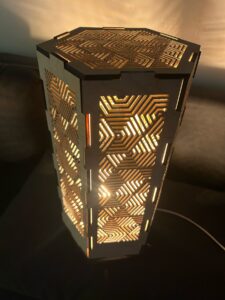
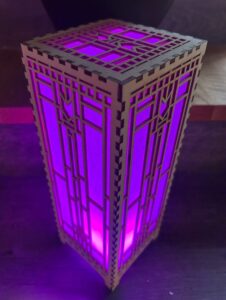
A couple of laser lamps

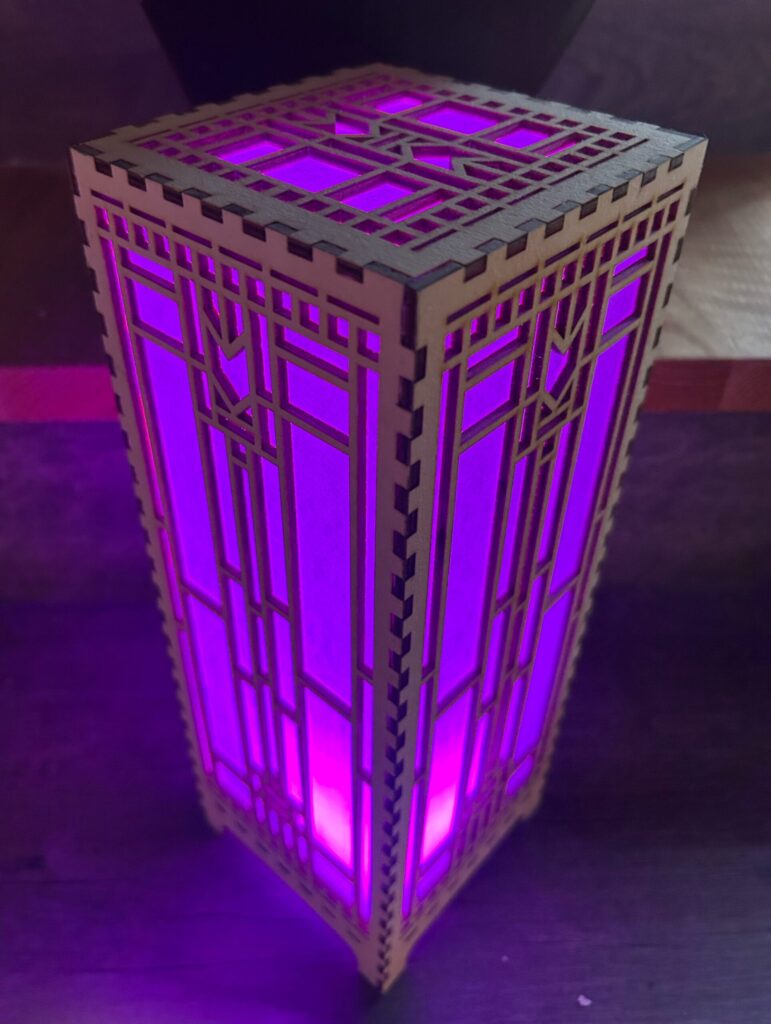
My first try using a laser cutter. These came out pretty much as-advertised, from templates I bought on Etsy.

I’m taking these as a training round – and inspiration for working on my own designs.

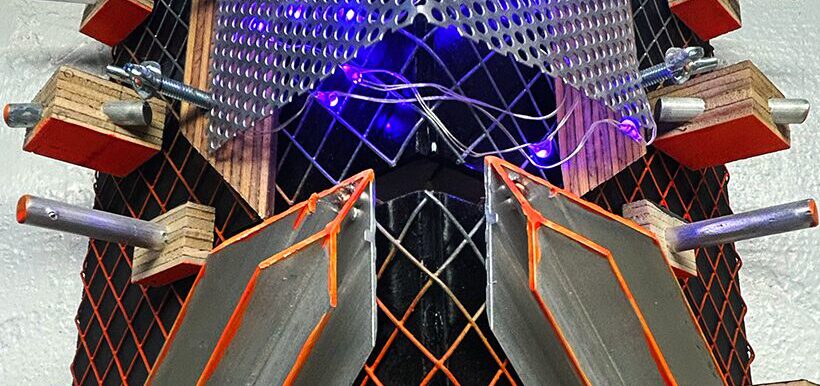
Techno-tribal mask for Luminata

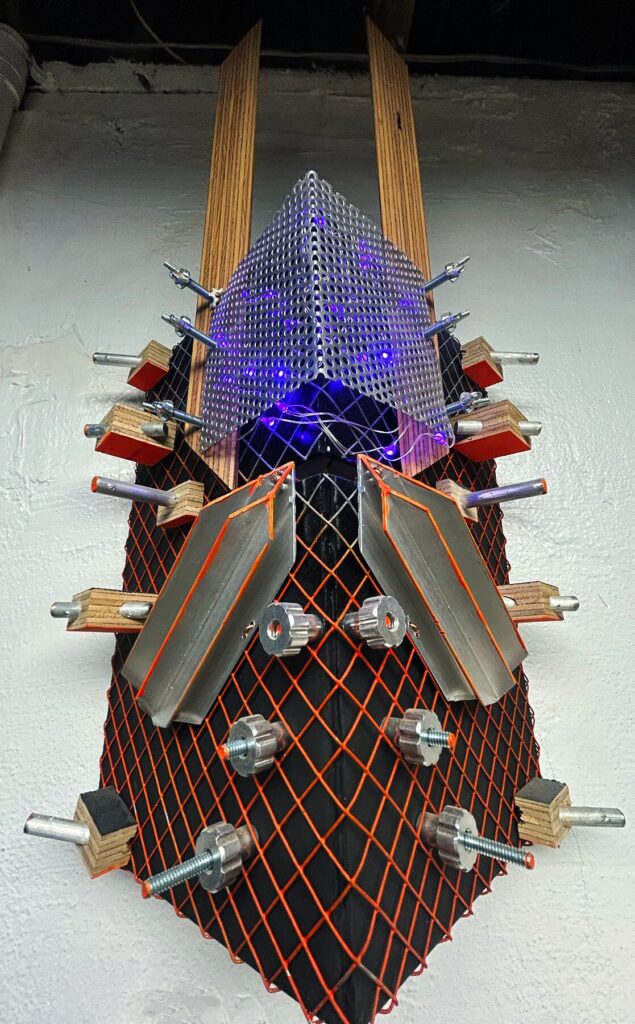
Every fall, Seattle holds “Luminata” – a festival of lights with a parade around the Green Lake in lighted costumes. I built this from scrap plywood, found hardware, chicken wire, and added a light array in front, and wore it with a black robe. You could *just* see through the slit across the bridge of the “nose.”

It was inspired by tribal masks I had seen in museum collections.

Lamp for the future

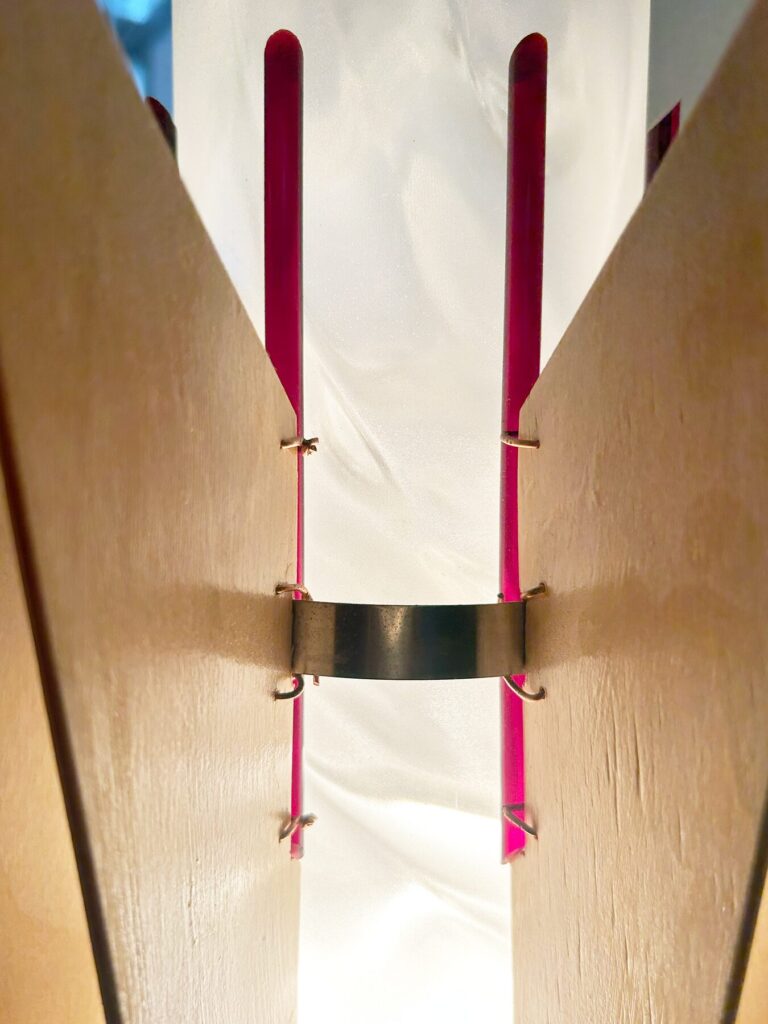
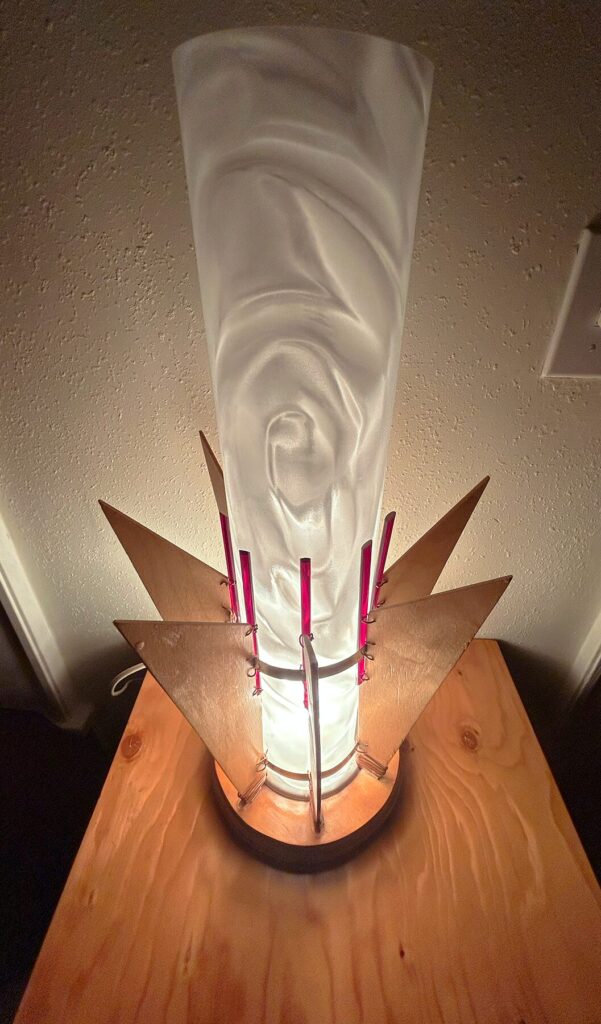
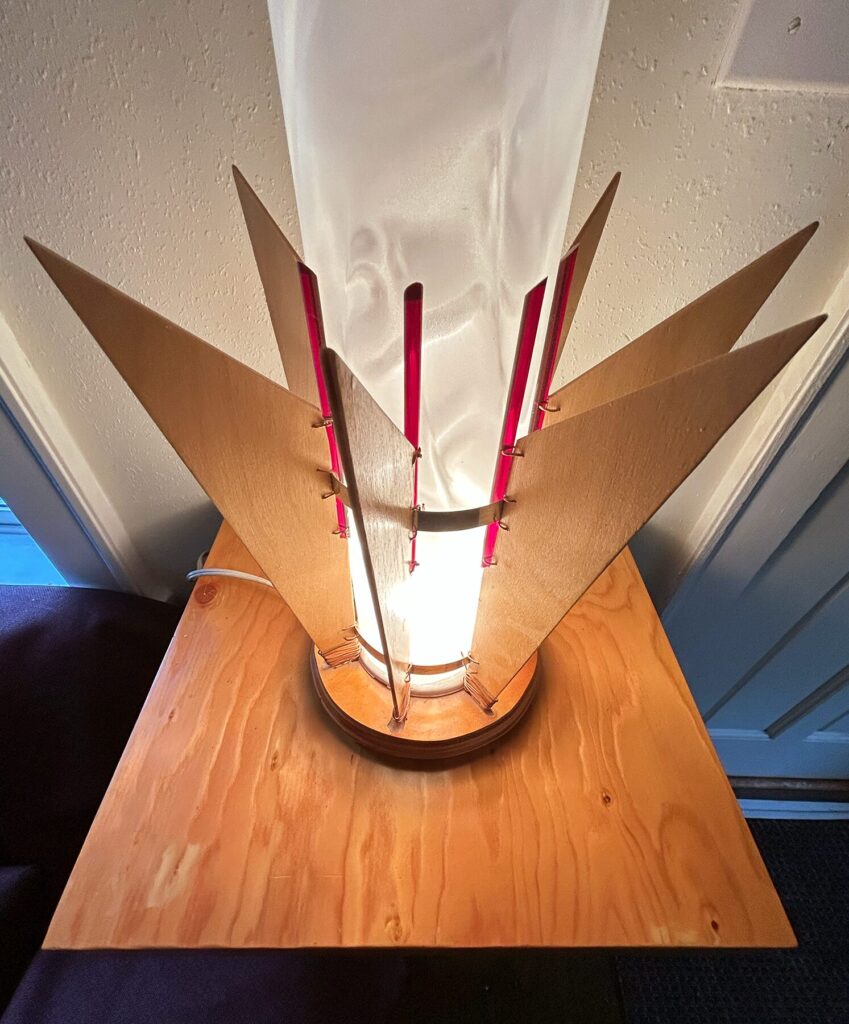
This was scratch-built from 3mm birch plywood, transparent red acrylic rod, patterned sheet plastic, and an assortment of hardware including metal strap and hog rings. I leaned hard on influences from the art deco age, where something warm and futuristic was always in the corner, lighting the room.

Gong Fights at Seacompression 2022

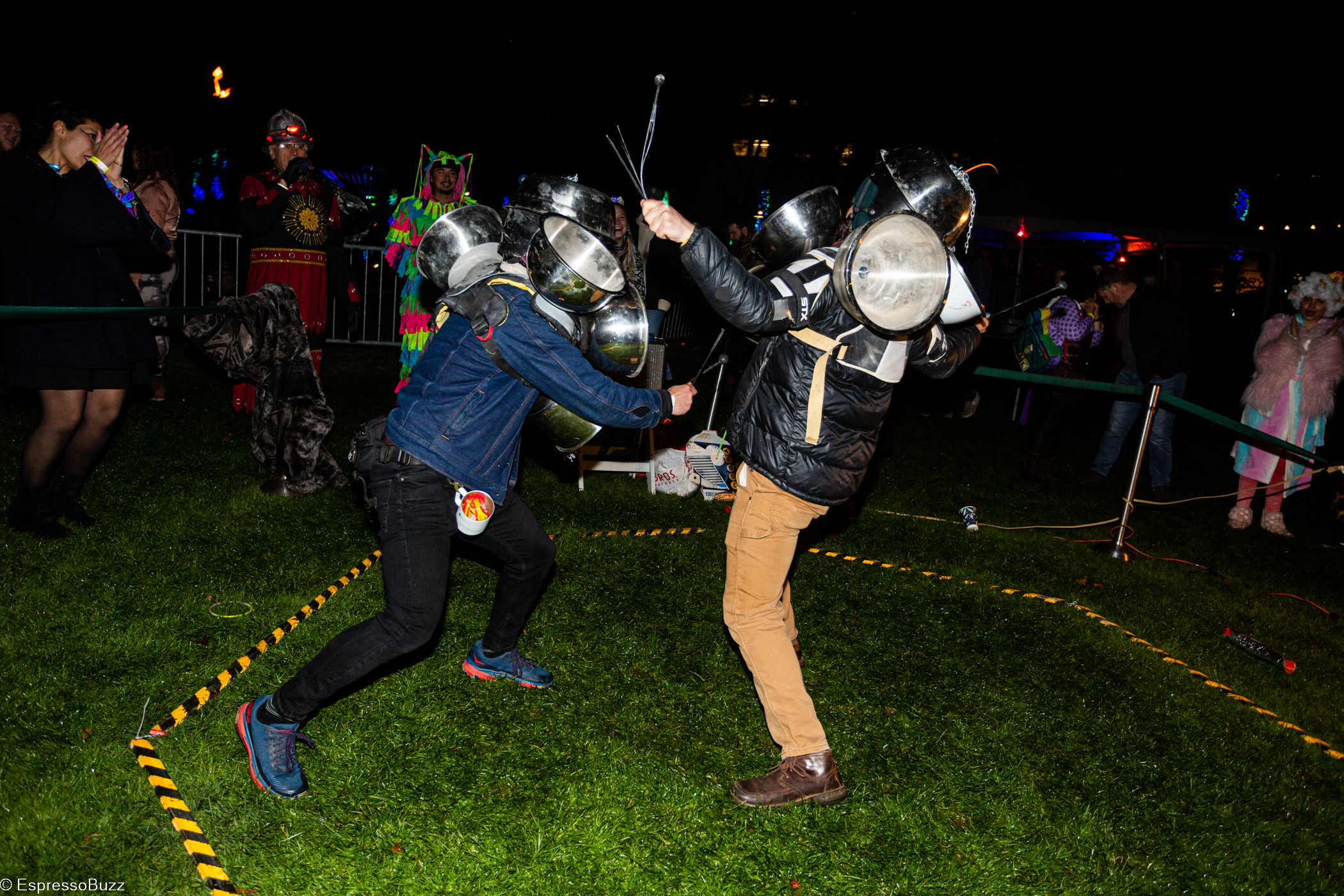
Once again, ladies and gentlemen: the brutality, the majesty, the stupidity of Gong Fights. (What???)

This session was at Seacompression a few weeks ago.

@findthecoretruth (parading the round numbers around the ring), our good friend Lara (in referee garb, judiciously scoring the fights and calling the winner of each round) and I (the robed announcer in the silly hat) were so busy staging the fights and interacting with the wonderful fighters that we forgot to take photos at the time.

Fortunately, @espressobuzz was on the scene and just shared the OUTSTANDING set of action photos they shot. #gongfights #ignitionnw

To see Gong Fights in action, check out our video from the playa.

Gong Fights at Burning Man 2022

I wanted to bring something fast, loud, and stupid to the playa this year. Something that was portable, easy to make and use, and memorable. (photo gallery below!)

You know the sound a steel mixing bowl makes when you strike its edge? I love the round, BONGing resonance of it. So:

Equipment: I built two sets of armor from raw materials found at Goodwill and our local hardware store:

  • Two sets of old football or hockey shoulder pads
  • Two old bike helmets
  • About 14-16 steel bowls
  • Assorted bolts, washers, nuts, wingnuts, and bushings
  • About 6 feet of light chain
  • Two superball-tipped, vinyl-dipped, fiberglass pairs of mallets
  • The Septagon – seven linked lengths of painted 1×2 pine on the playa floor to contain the fights.
  • 1 overhead scoop light for atmosphere
  • 1 amazing camp tower at OKNOTOK, the legs of which were roped off as the ring.

Safety gear:

  • Goggles
  • Gauntlets made of polycarbonate sheet
  • Earplugs for all fighters! (that shit gets loud, even in testing)

Rules: 

  • Overall:
    • No intentional blows to the face
    • No intentional blows to the ‘nads
    • If you step outside the Septagon (or you’re pushed), you lose
  • Fight with Violence (see video):
    • Strike the chest or head gong (fitted with chains, to make a distinct noise) to earn points
    • 15 points takes the round
    • 3 rounds wins the fight
  • OR fight with Art (see video):
    • Fighters must strike each other’s armor as musically, creatively, uniquely, balletically as possible
    • You have 60 seconds
    • The crowd judges the winner.

Gong Fights exceeded my wildest dreams! The ferocity of the Violence Fighters, the grace of the Art Fighters, and the the idiot noise and chaos overran all rational concerns, and a kind of animal fervor took over.

It was stupidly magnificent, and magnificently stupid. Thank you especially to Mr. OK, Michelle, Lydia, Dakota, Thor, Sumit, Dandelion, Drift, Jackson, TwoNames, HoneyBear, Mike, Special Snowflake, and everyone else who armored and scored and assisted and fought and danced and hooted and lost and won.

13/10, will do it again.

(photos by Sumit Jamuar, video by @brian_huy_mac and @z_antibeersnob)


What do you do with decommissioned gongs?

You recommission them, that’s what.

I had to leave XyloVan’s keyboards behind in storage when we moved from Los Angeles (no room in NYC).

But I brought the disc gongs with me. I finally got around to rebuilding them into something a lot more compact and portable, and I took the opportunity to engrave them all in the style of the two spare-tire-mount gongs, which are at the center of this array.

There’s a lot of energy stored in these, from all the thousands of people who played them since I first bolted them onto the van back in 2010.

I love that I can still play with those souls through this thing.

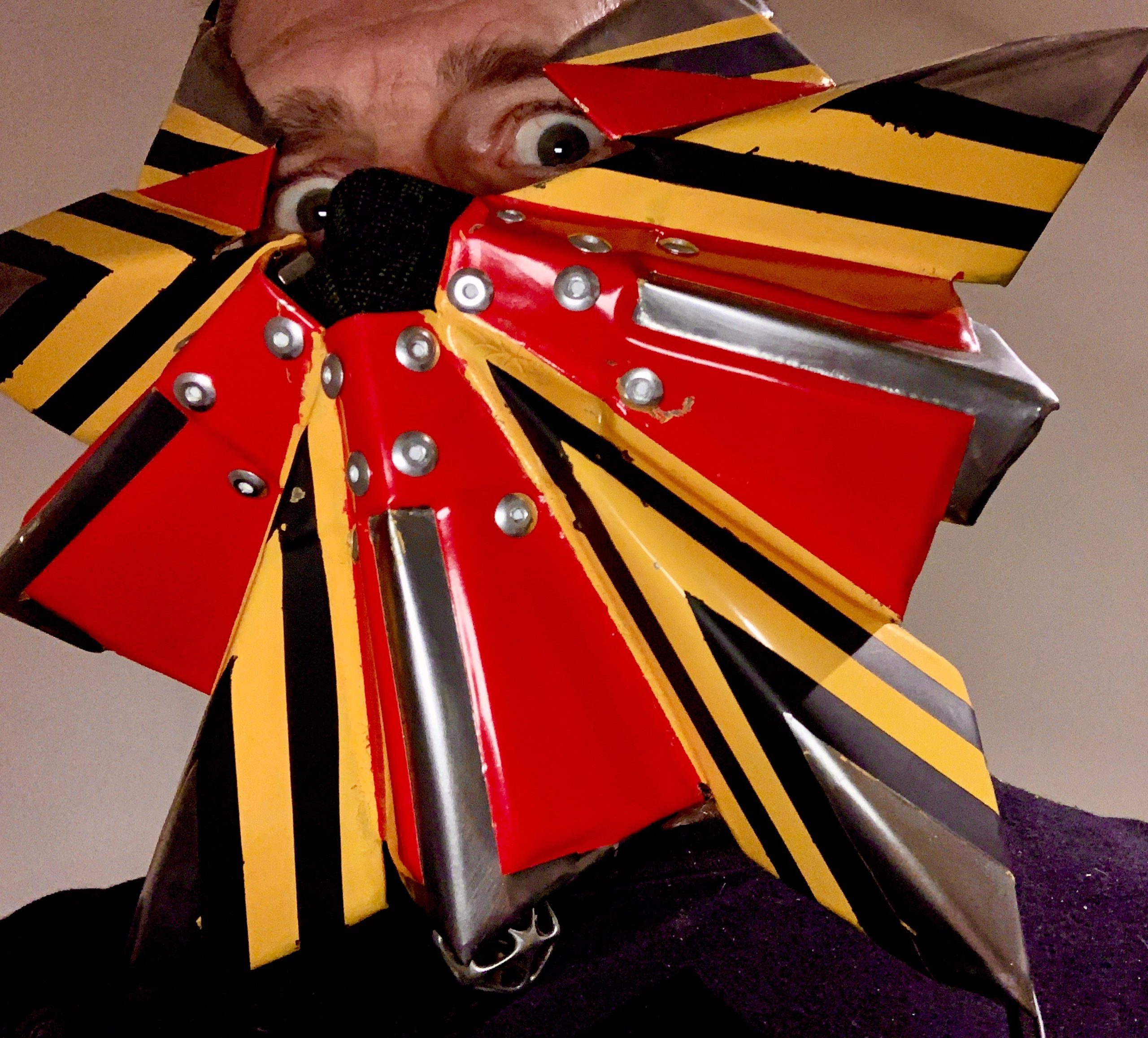
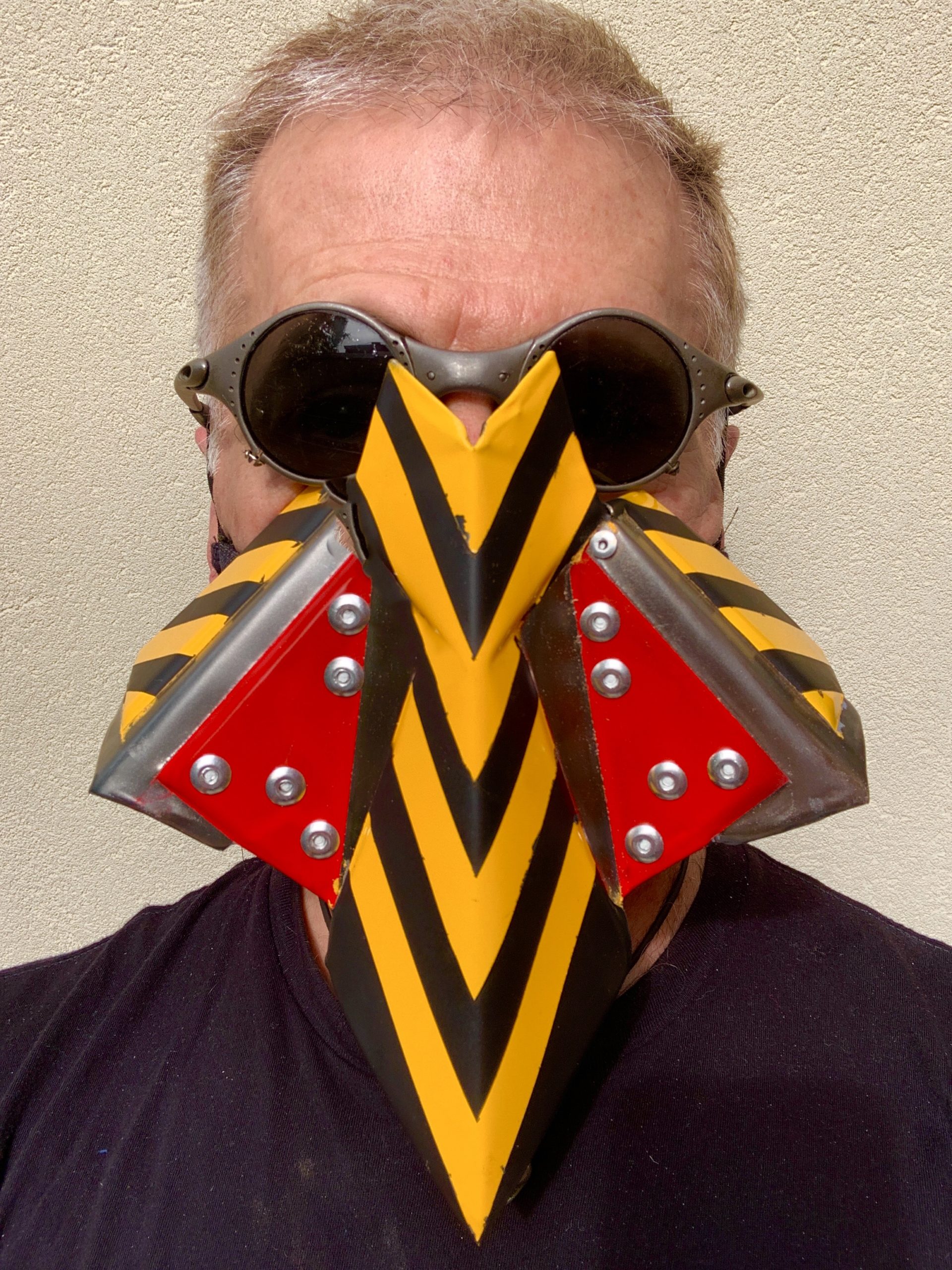
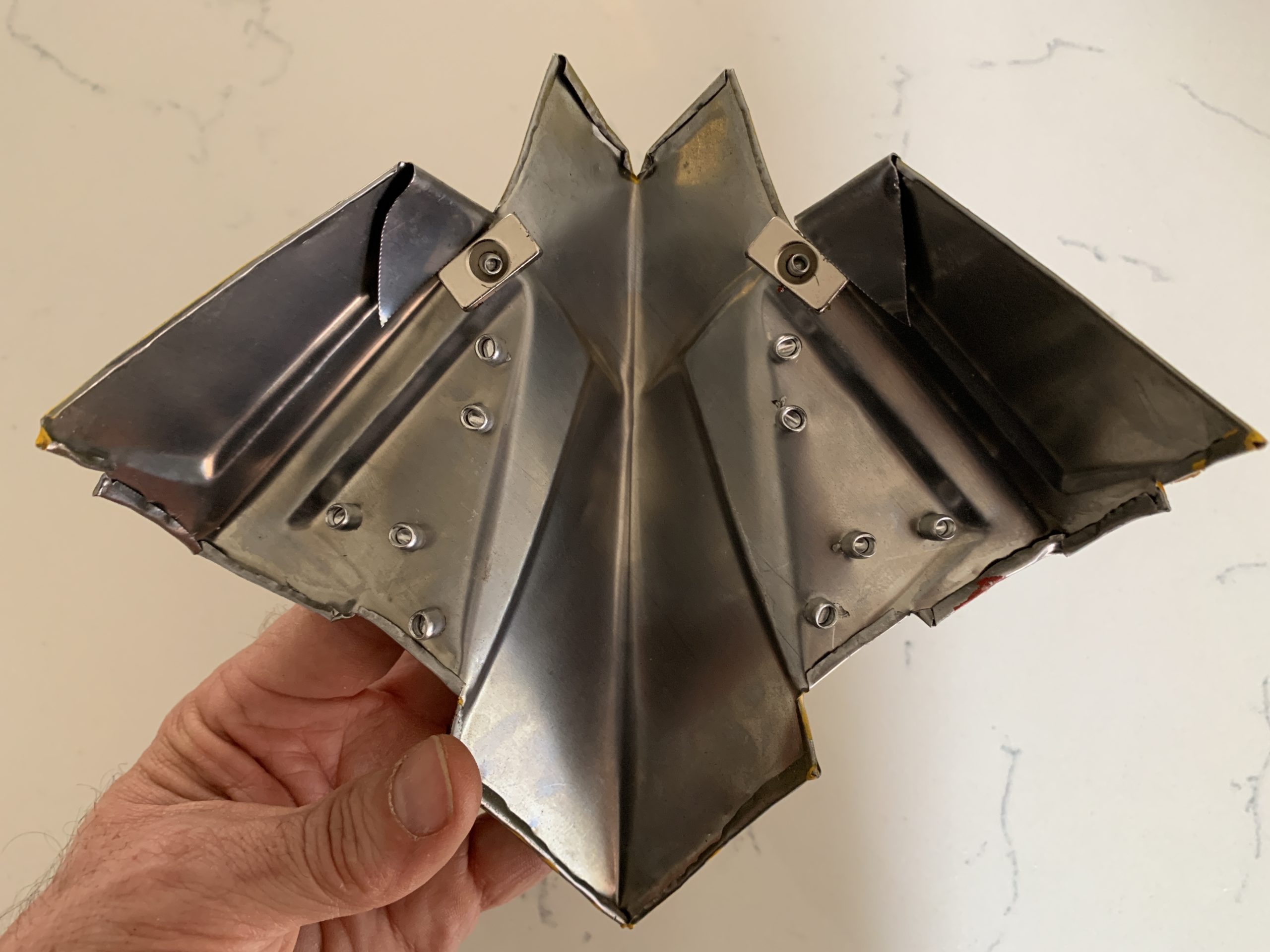
Pandemic Warning Mask 3, with magnets

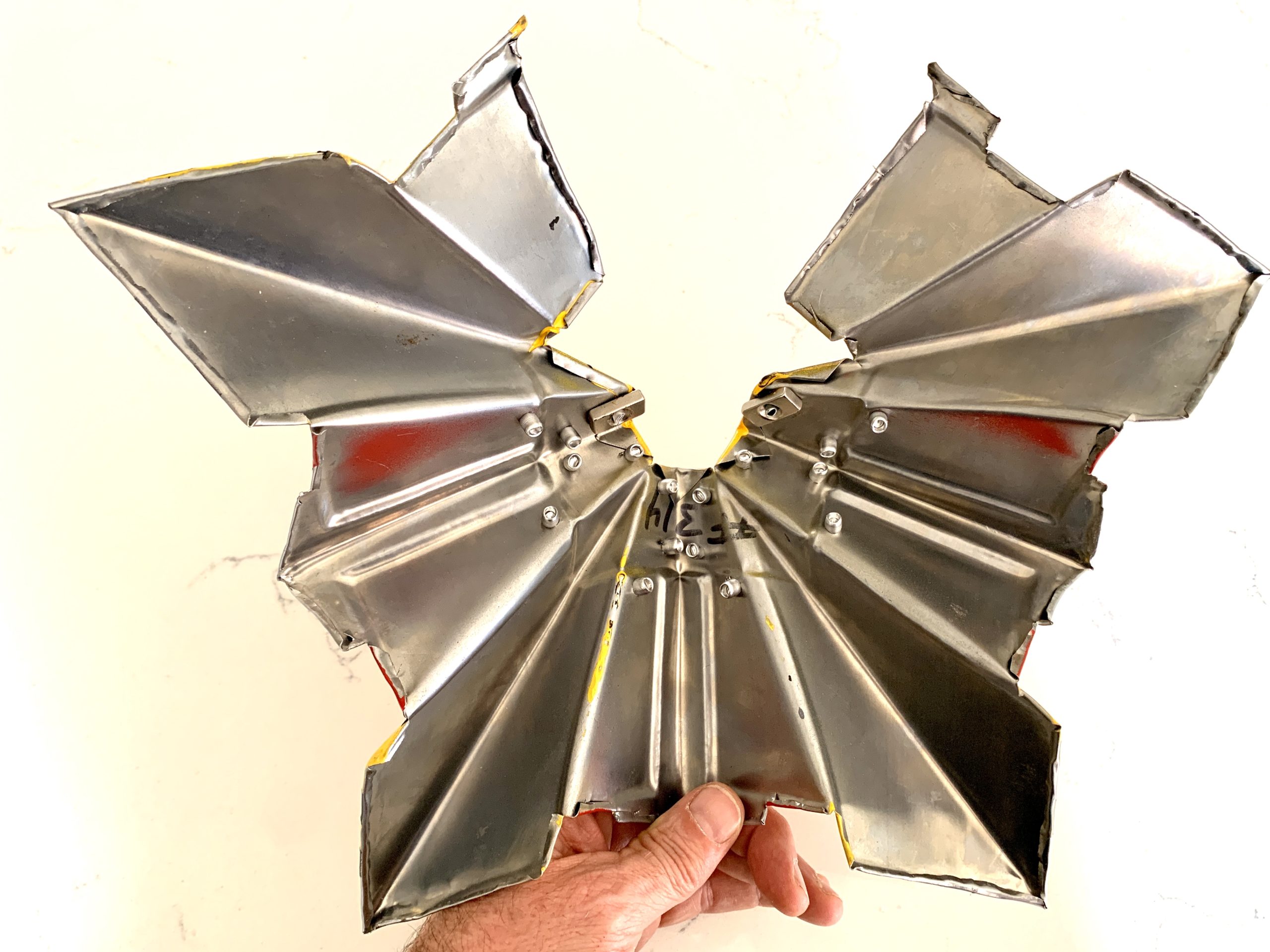
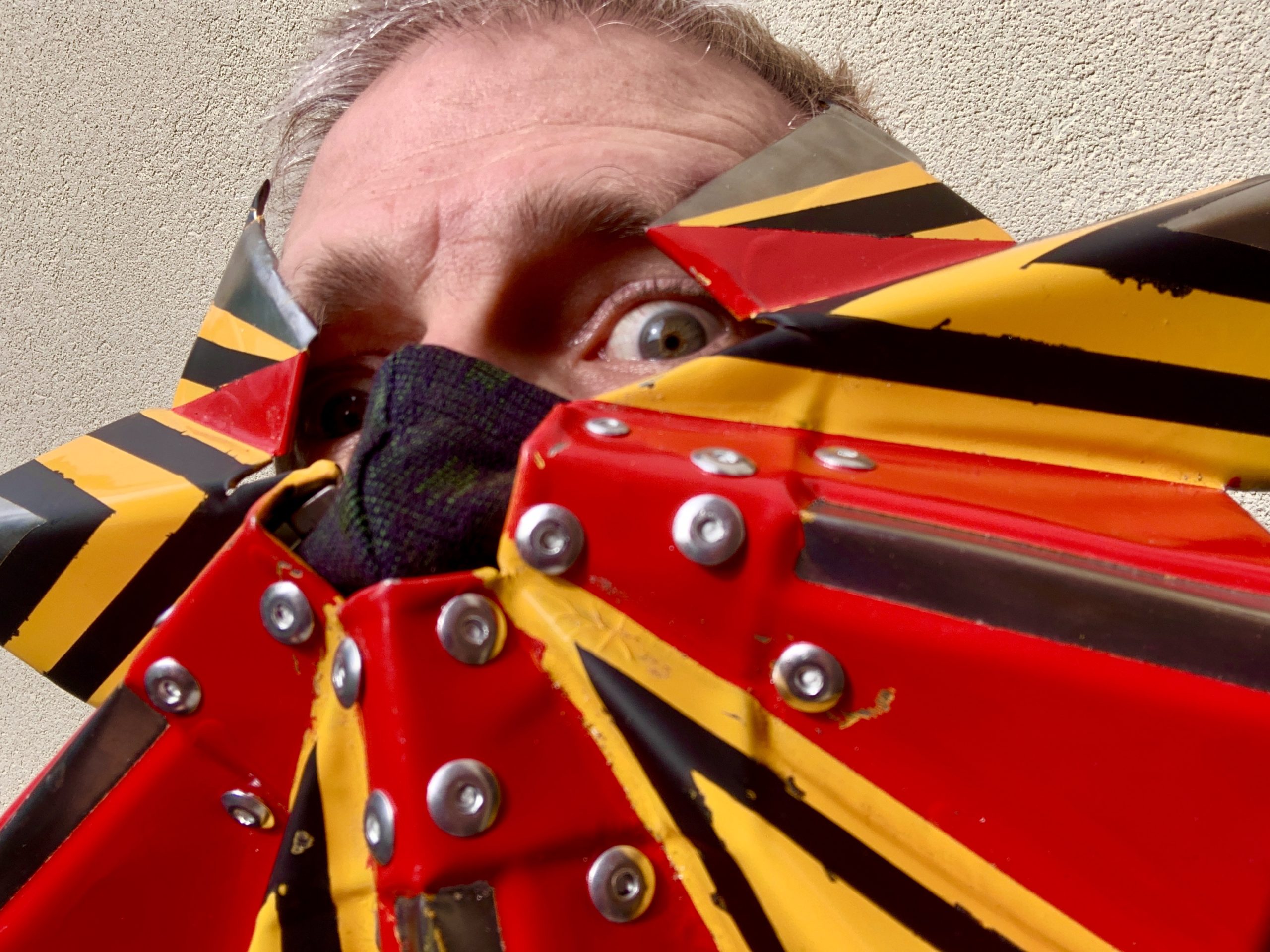
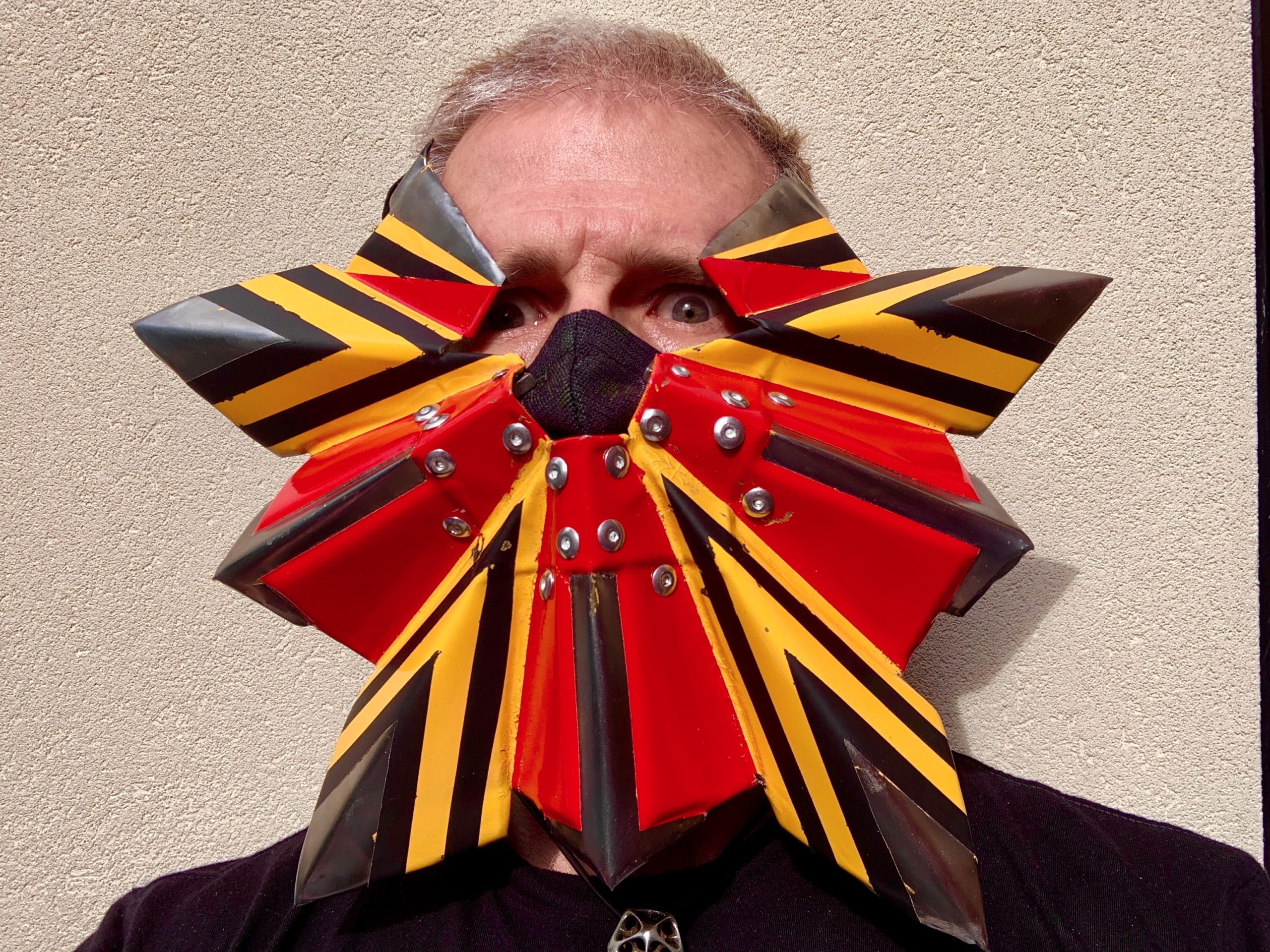
This mask was the largest one I could manage to cut out and make wearable from the tin ceiling tile, which was originally a 3-by-3-foot sheet of tin.
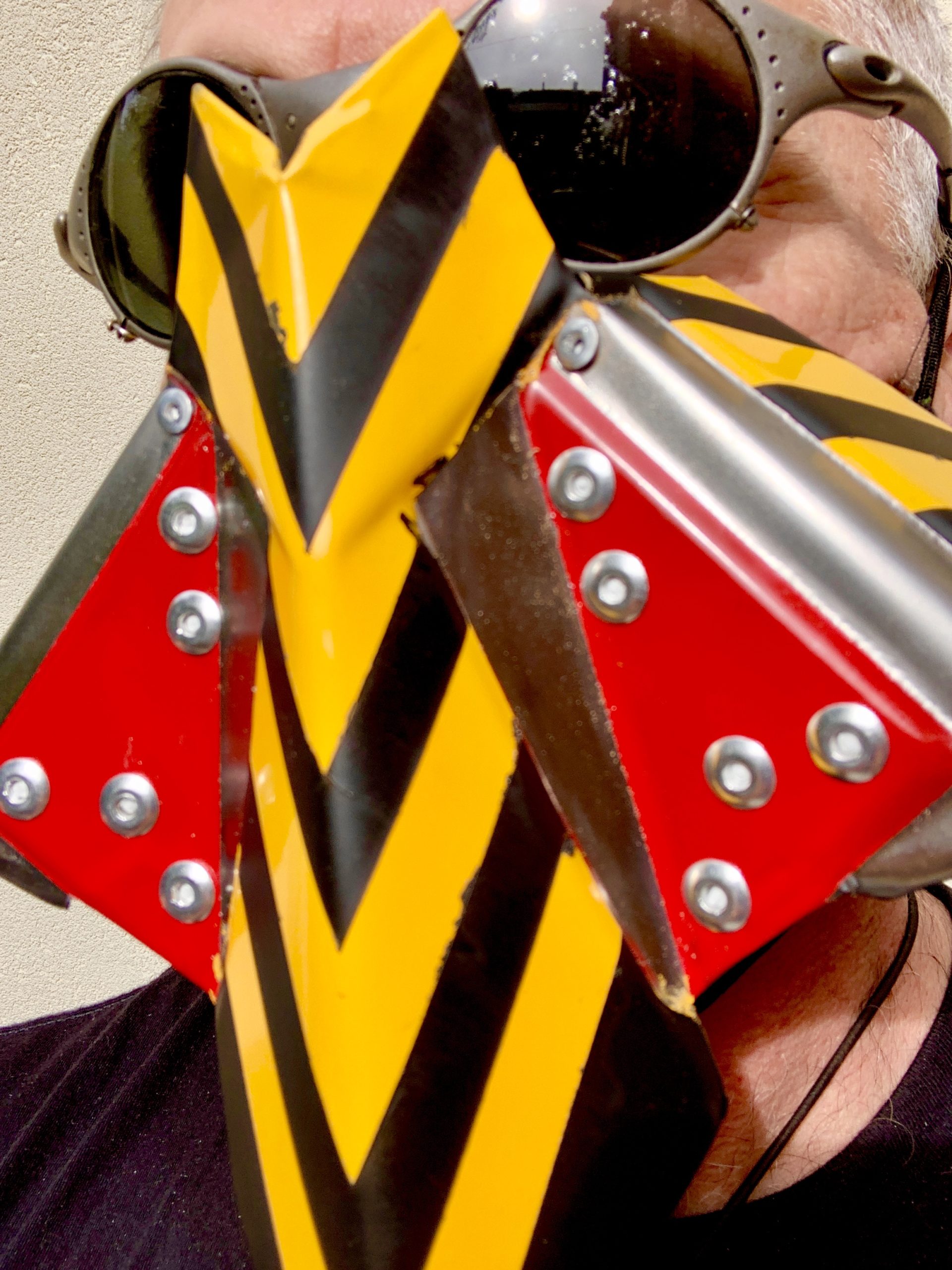
It is definitely meant to be worn without sunglasses so that the wearer’s eyes are visible.
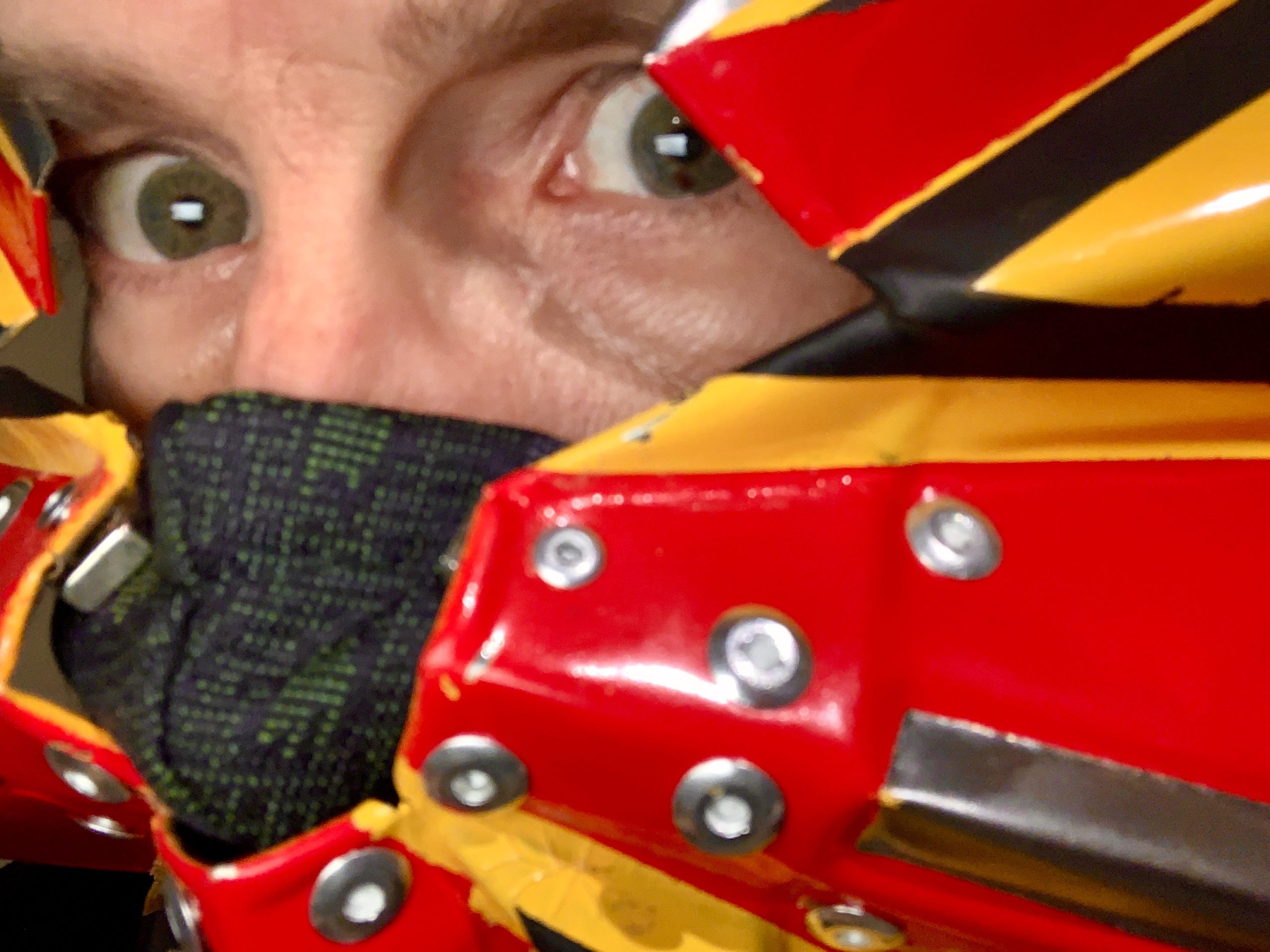
I also fabbed a new mask, including magnets so that the faceplates are interchangeable (see VIDEOS at the bottom of this post)- and so that I didn’t have to sew a new cloth liner for every single iteration of this series.

The videos below show how easily the faceplates can be changed, and what they look like in three dimensions.


VIDEOS:
Mask 2 and 3
How magnets work

Pandemic Warning Mask 2

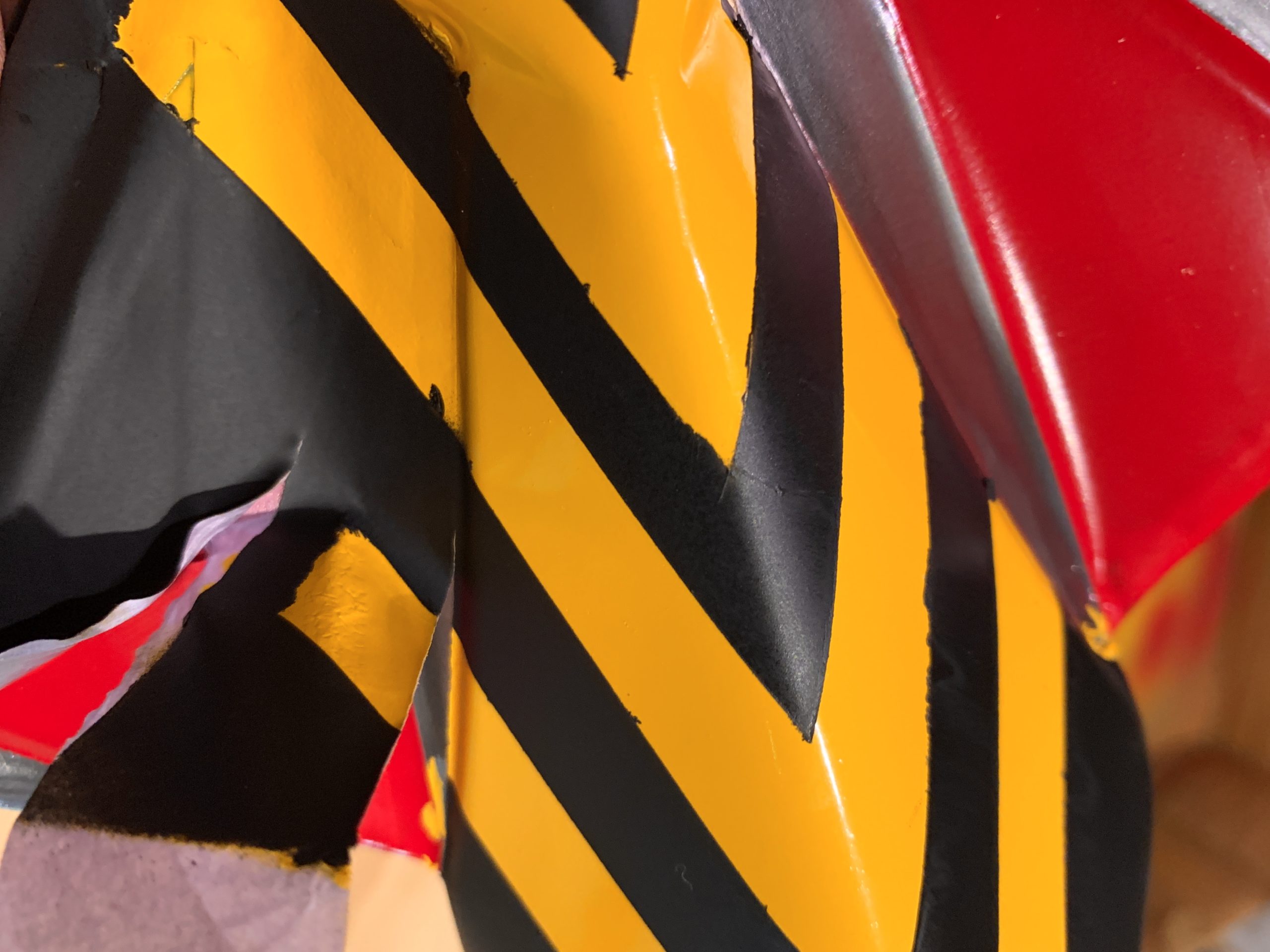
I learned some things on the first mask. I’m still really pleased with the way it turned out, but this time around I primered the surfaces I intended to paint, and the paint went on a lot more smoothly and did not crawl and craze in the way that gave the first mask it’s beaten-to-hell patina.
IMG_2106

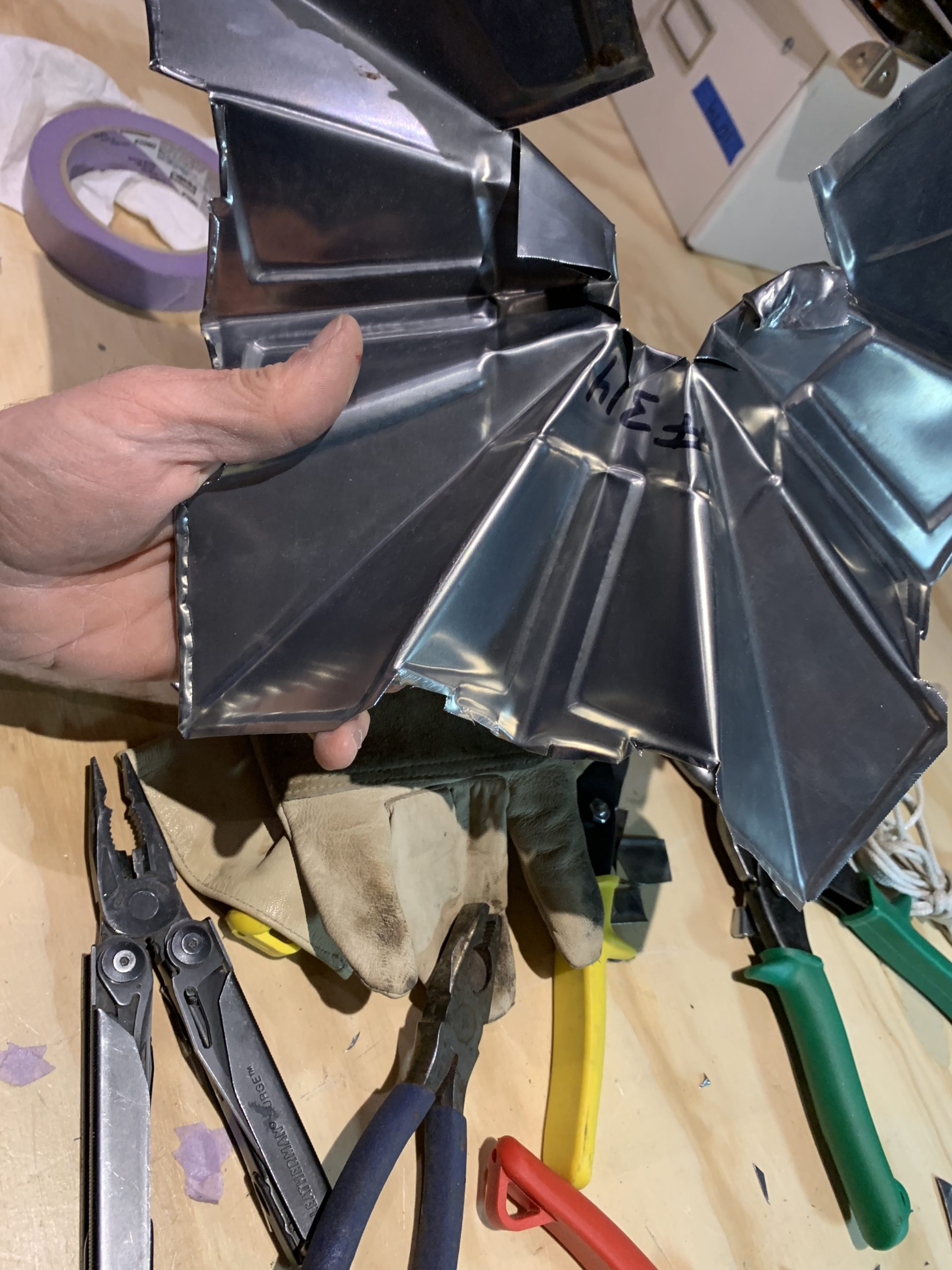
Quarantine project – pandemic masks

I’ve started a new personal project about the pandemic, masks and fear.

I’ve had these sheets of tin ceiling floating around the shop unused for years and found that the stuff lends itself to cutting, bending, painting and rivets, plus it’s sturdy and not too heavy to wear. (And yes, that’s a double-layered cloth mask behind the tin, so it’s wearable in public as protection.) You can find more in-process shots on my IG.

Others are in the works. Watch this space!

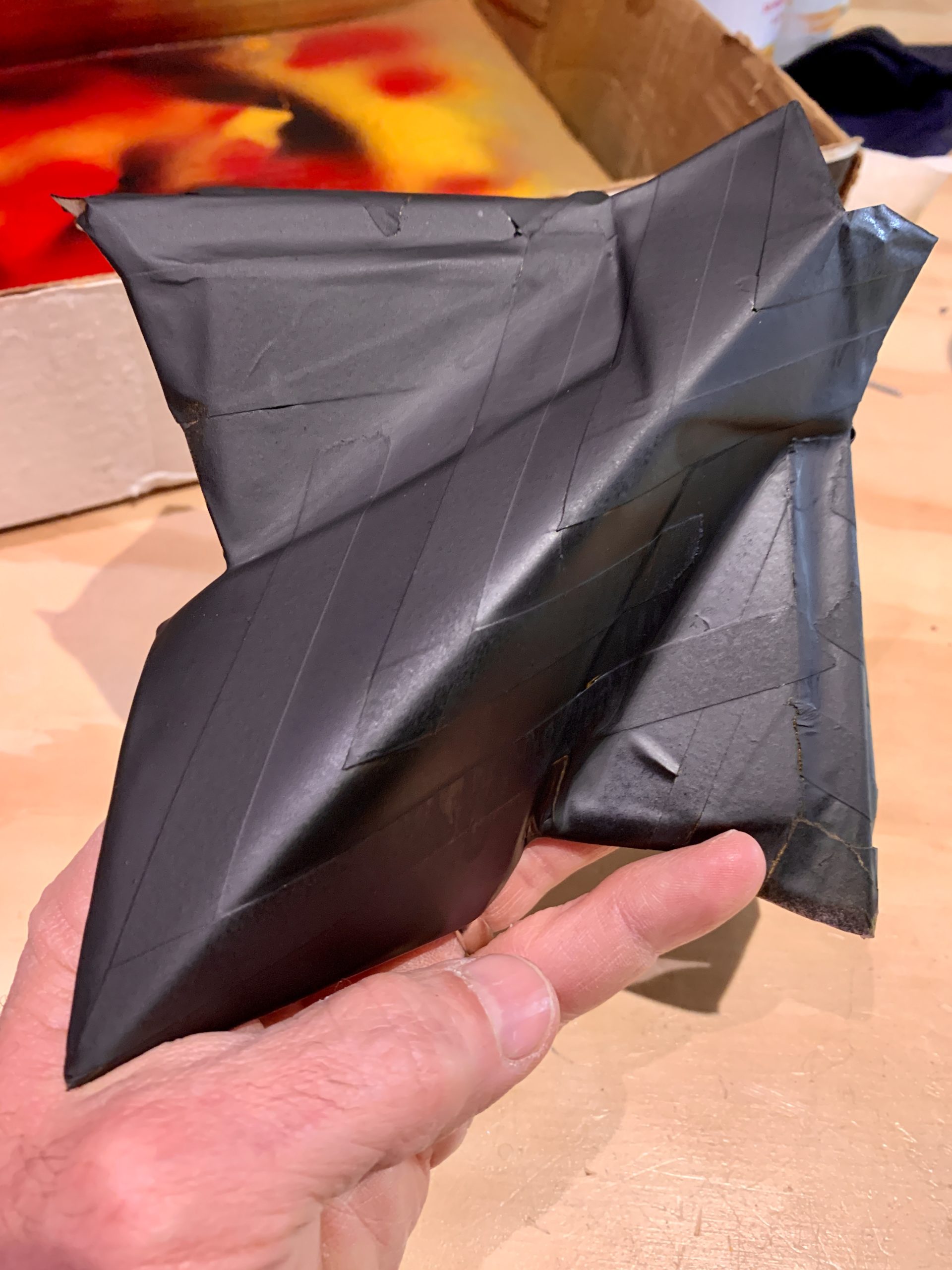
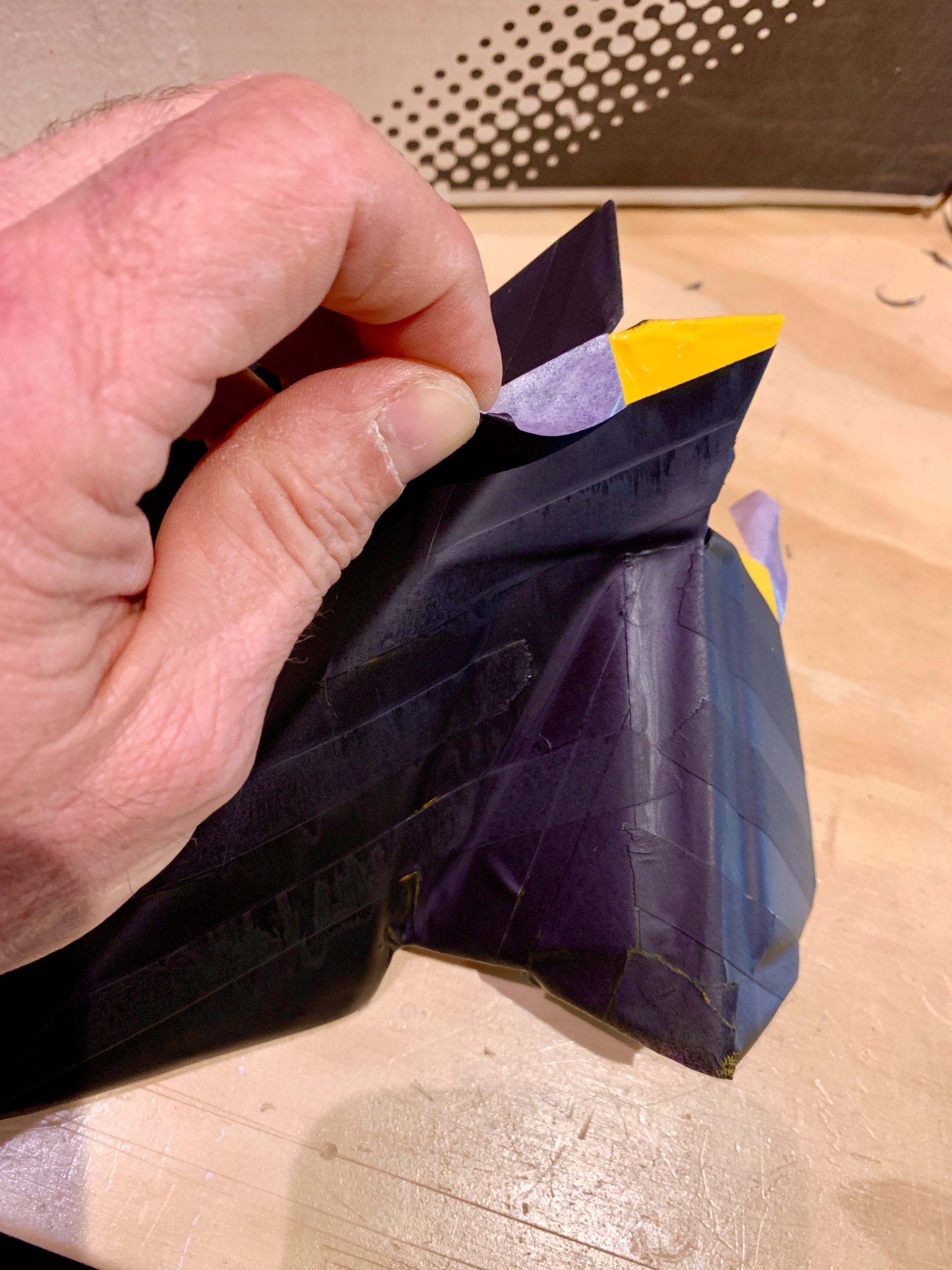
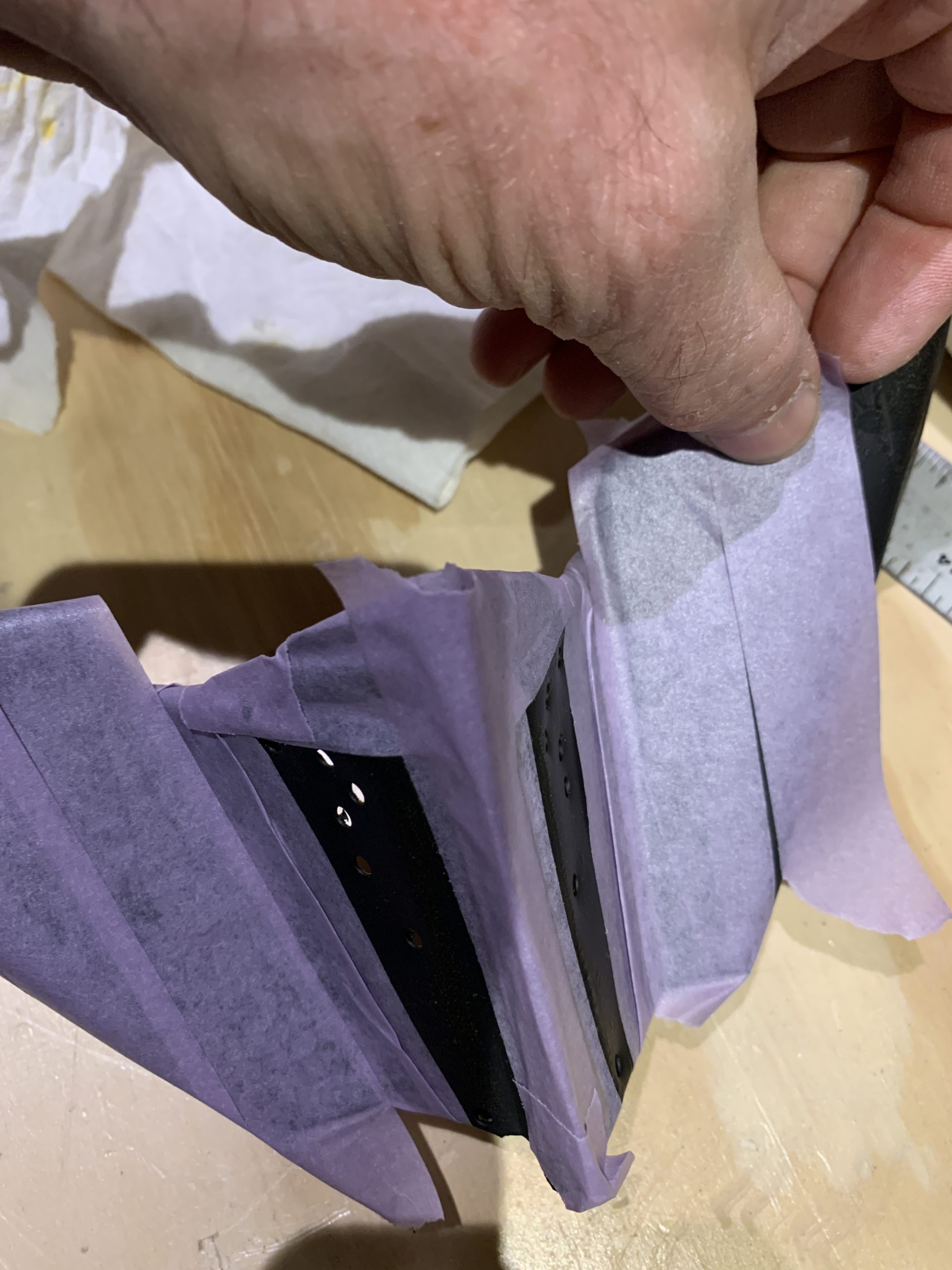
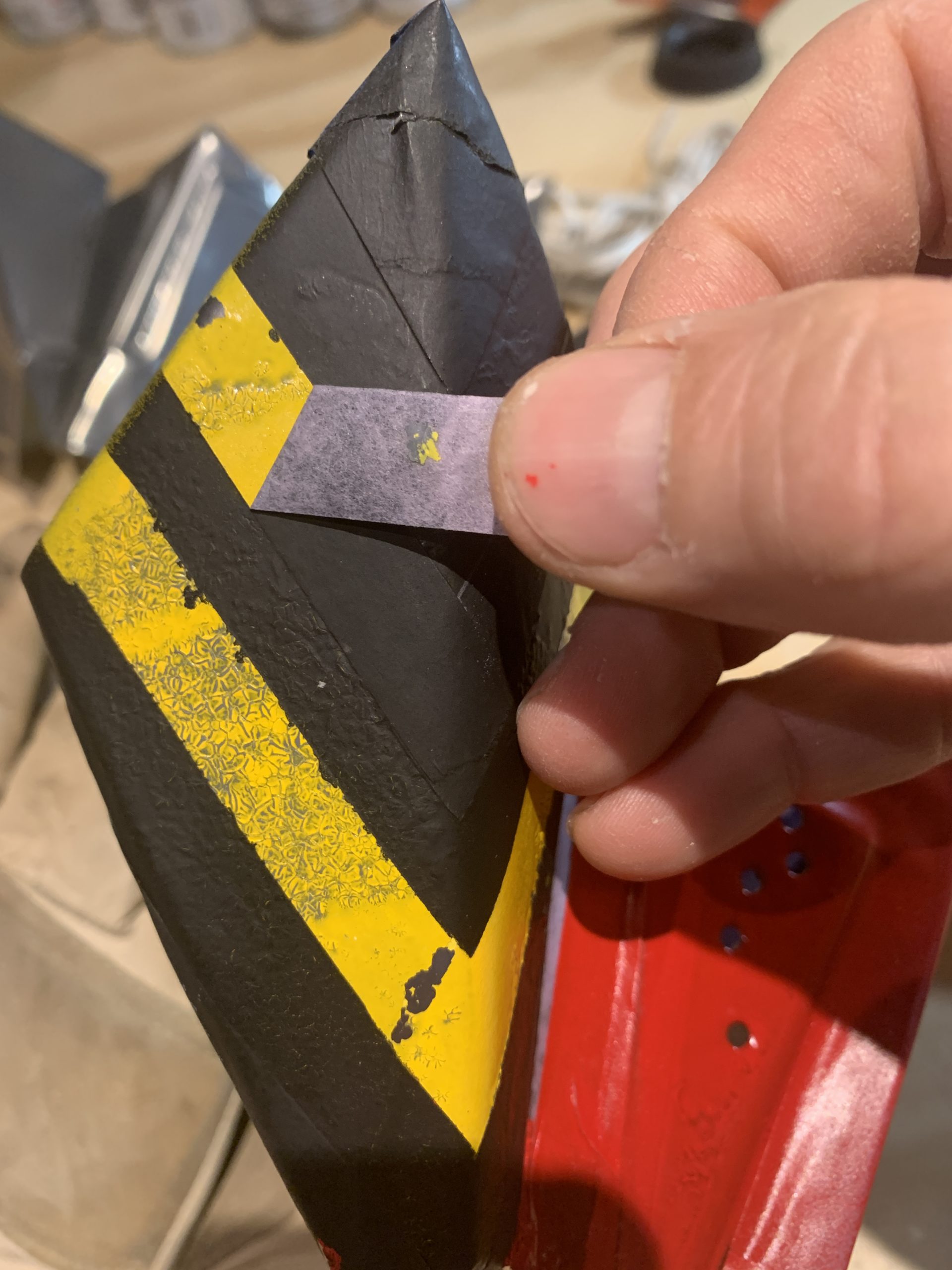
Mask off the stuff you don’t want painted

Spray black over masked yellow, then pull the tape

R.I.P. XyloVan – 2010-2019


XyloVan began its life nearly 10 years ago as an idea: Let’s build a mutant vehicle so our young kids can ride around even after bedtime and we can all enjoy Burning Man safely together after dark.

The van’s full, rich and musical life ended last month – after so many adventures, mishaps and miracles that I never could have dreamed of – with me stripping off the xylophones and gongs and putting the vehicle up for sale.

It was like building it all over again – but in reverse. (see photos below after the jump)

Deeply bittersweet.

I peeled off the magic, wrenching the hand-made instruments from the 3/8-inch mounting bolts where they had ridden ever since 2010, when my wife and kids and I began transforming a 1985 Ford 350 ClubWagon XLT into the only musically-playable art car I’ve ever met.

I unwired the control pod carrying the digital-delay mixer and Arduino control box, and stowed the electronics and cables for future projects. I put the instruments into long-term storage against the day when I might bee foolish enough to build another musical mutant vehicle. And I turned the van over to … More

XyloVan is (mostly) FOR SALE


You read that right: This day had to come. We’re moving, and the time has arrived for me to send XyloVan (1) on to its next incarnation. 
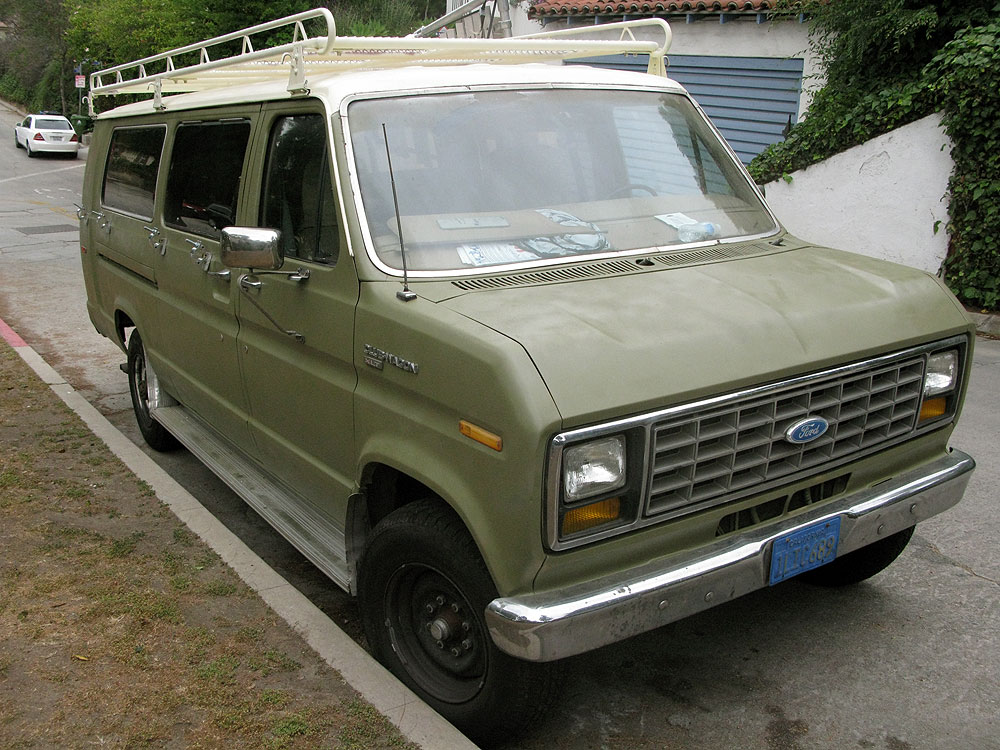
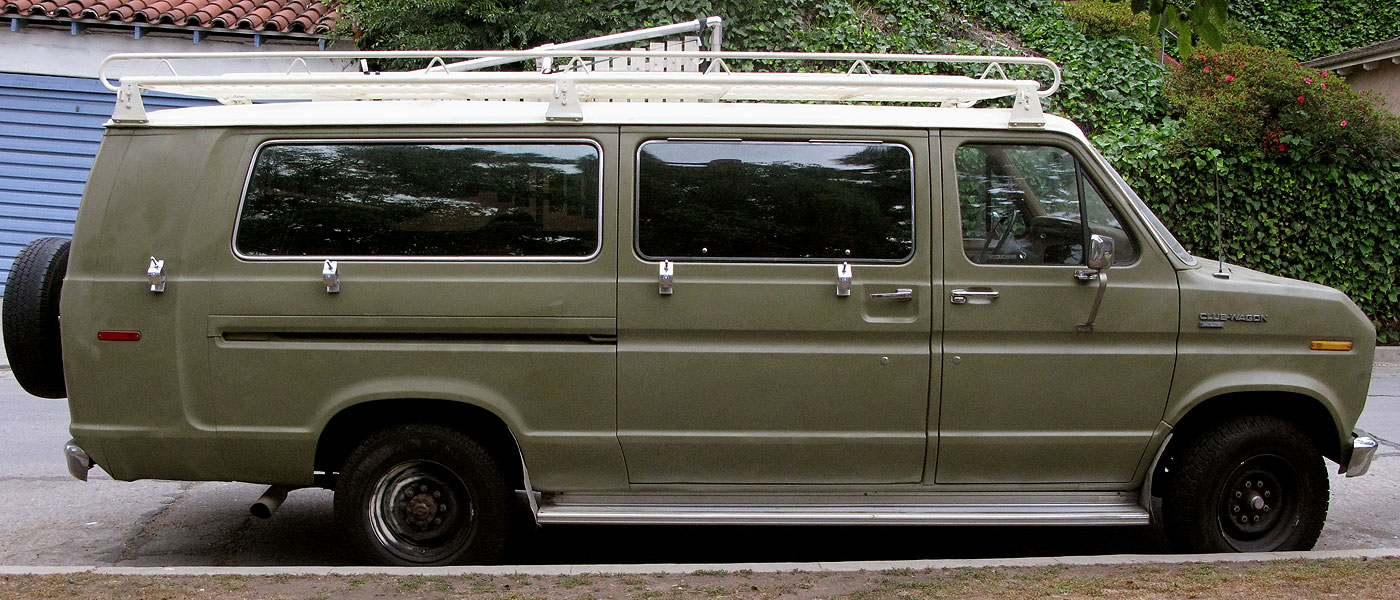
Underneath the instruments, (and the patina of wonderful music, noise and love that thousands of people have laid on them during its 9.5-year existence), lies a sturdy old 1985 Ford ClubWagon XLT. It is dying to be reincarnated as a new mutant vehicle – maybe yours.
I’m moving soon to a place where I won’t be able to park its 25-foot length, and I’ve been thinking of changing XyloVan’s basic design for quite some time now.

So, it’s time to split the music from the van, and send both on to new lives.

I will mount the instruments on a new vehicle (design still in the works). And I am selling XyloVan’s base vehicle WITHOUT INSTRUMENTS –  asking price $350.  

Somewhere out there, a fellow Burner with dirt under his fingernails and fire in his eyes needs this van – and can envision a new mutant vehicle built on this beefy, high-capacity foundation. Any questions?

Here’s what you get:


1985 Ford ClubWagon XLT

  • 7.5-L V8 engine, RUNS STRONG
  • Interior seating for 10, or aninsane amount of cargo room if you pull the benches.
  • Standing room on the roof (with a ladder and attachable chest-high guardrails!) for 10-12 people
  • Full-width rear step for easy loading of people & gear
  • Rebuilt V8 cylinder heads
  • Rebuilt carburetor
  • Rebuilt steering box and front end
  • New water pump
  • New alternator and voltage regulator
  • Near-new tires
  • Stereo/CD player with MP3 jack
  • Onboard 12V power system with two deep-cycle marine batteries
  • 12V Arduino panel with 12 RGB/LED light circuits 
  • 120V AC power inverter
  • Extra Flair: Burning Man Department of Mutant Vehicle daytime and nighttime permit stickers and playa vehicle passes for 2011, 2014 and 2018.
FILE PHOTO – roof rack is included

Full disclosures:

  • Xylophones and gongs are NOT INCLUDED
  • No AC. 
  • Some oil leaks.
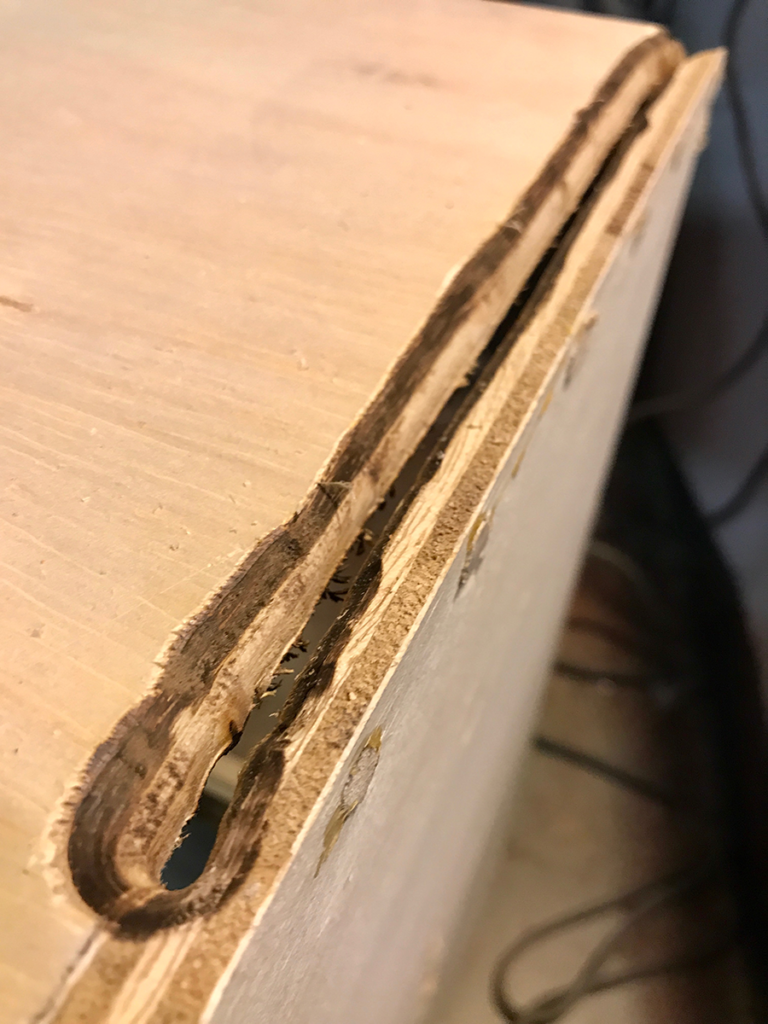
  • Bodywork will have some holes left by removal of the mounted instruments. 
  • There is no body rust of any size, but the paint is heavily weathered
  • Must be jump-started at the moment, as it has a (probably simple) charging problem I’m not qualified to solve. 

Other than that, it’s a rock with a ton of history and dust in it. It will definitely make thousands of passengers (and a few mutant vehicle builders with fire in their eyes) very, very, very happy.

Want to come by and take a look? Ping me!

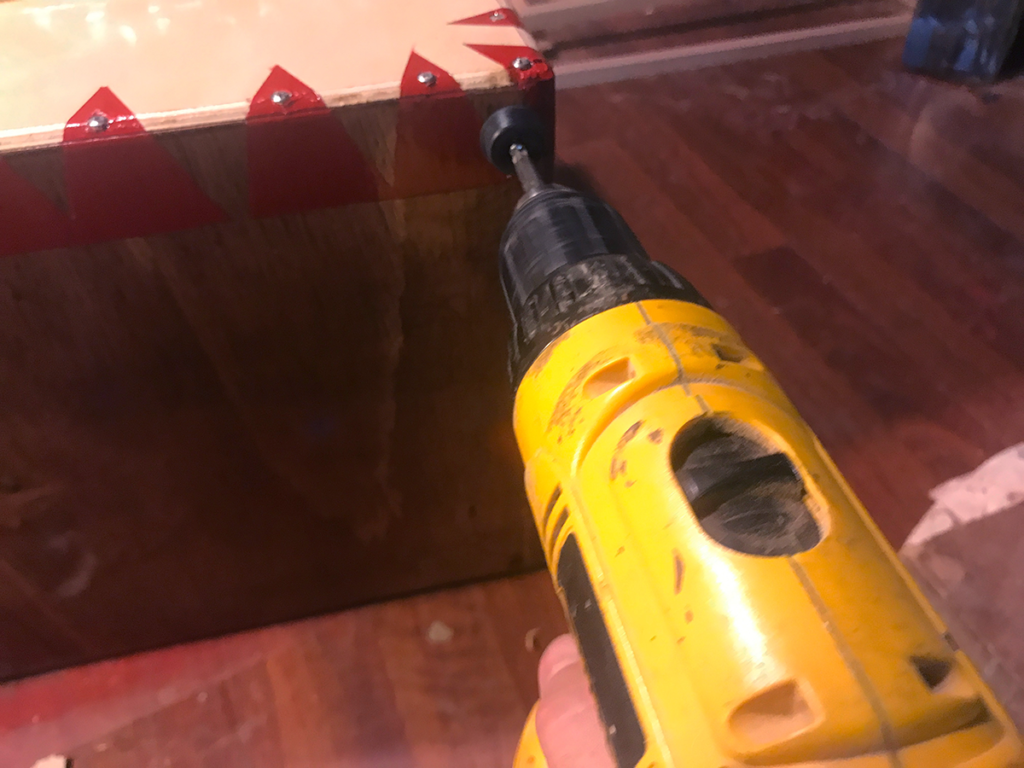
Veering off into left field – to build a marimbula

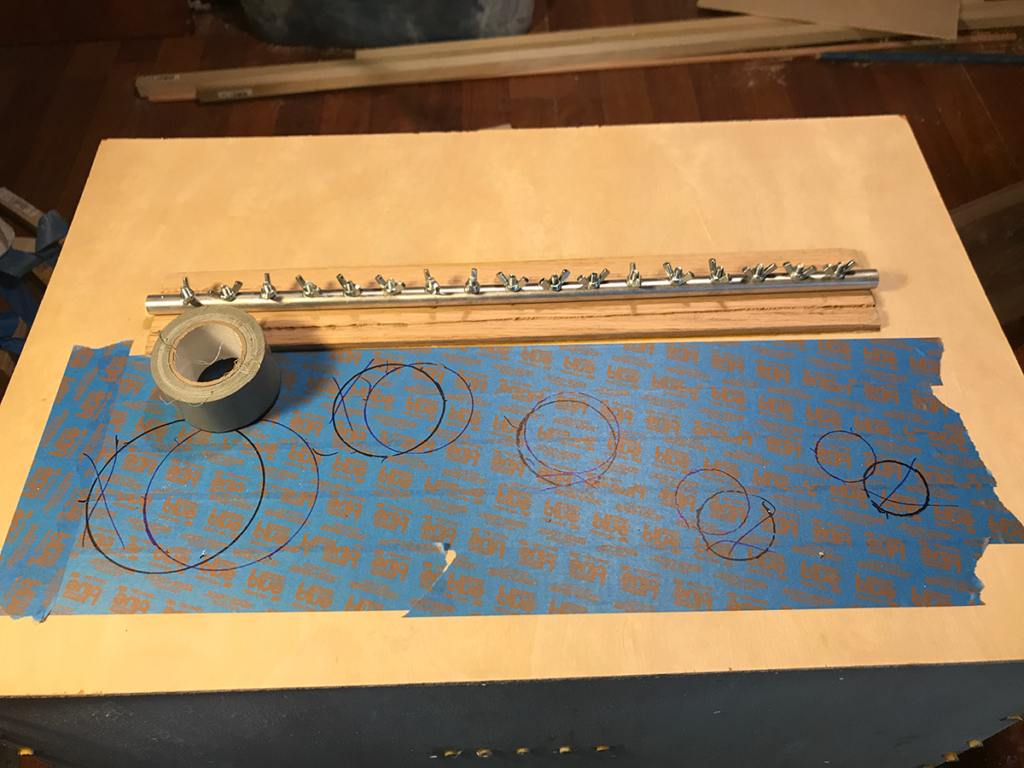
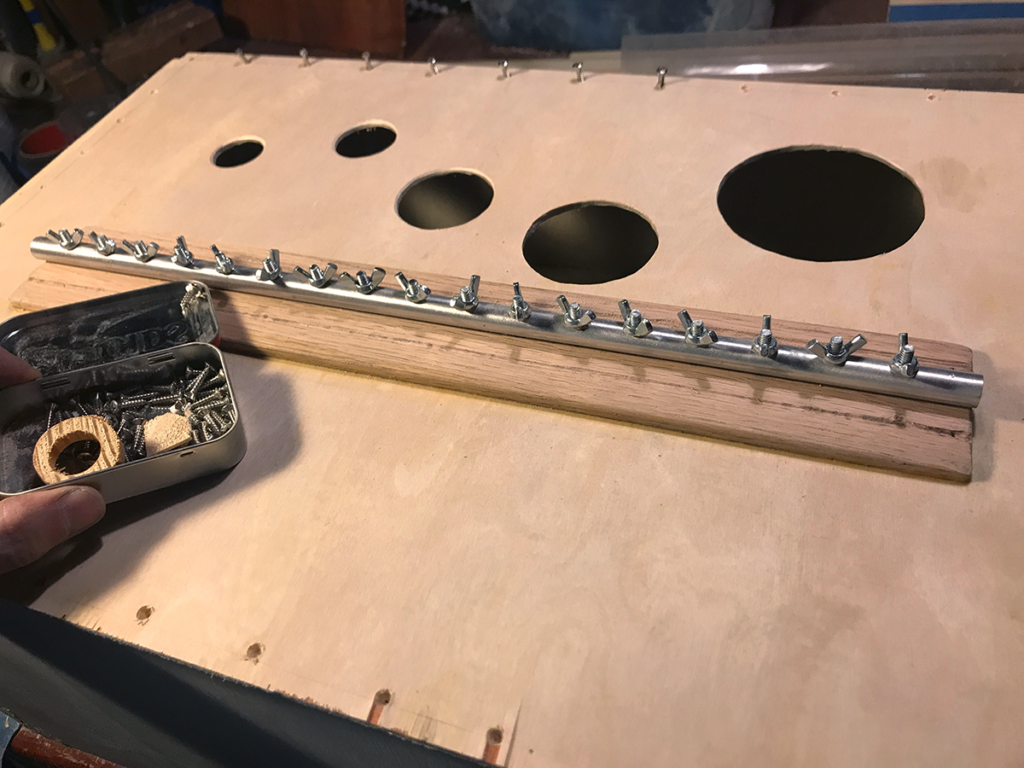
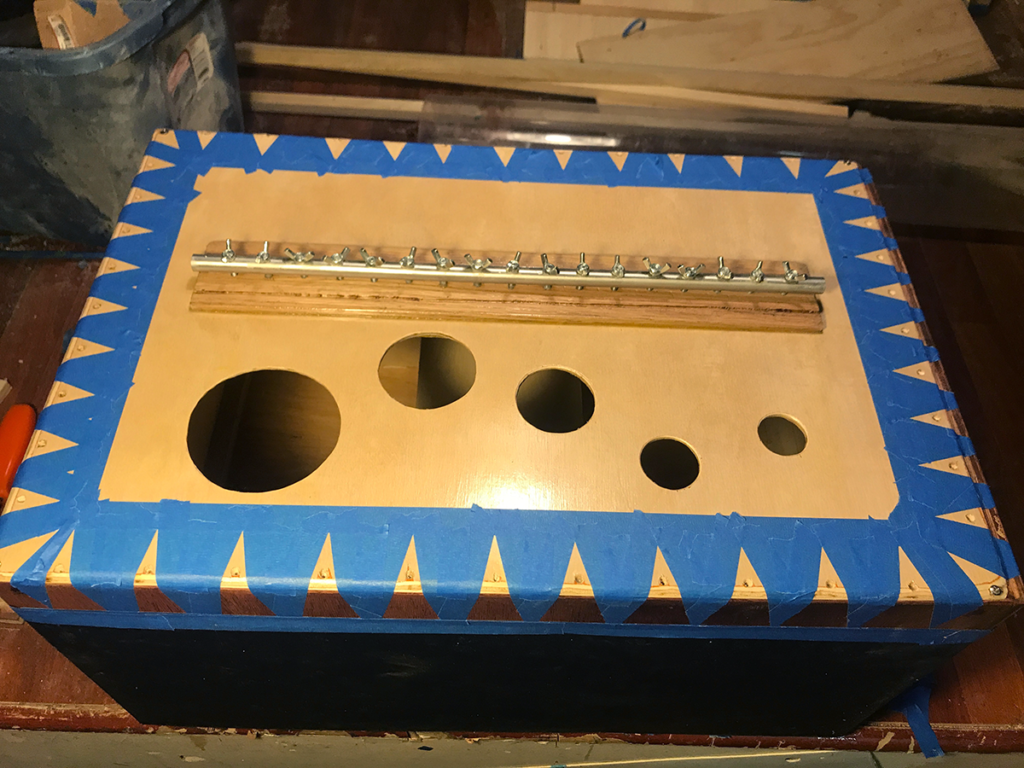
This is a long way from xylophones and propane-tank drums, but I’ve really enjoyed building cajóns and – for the first time – a marimbula.

Quick demo and walkaround

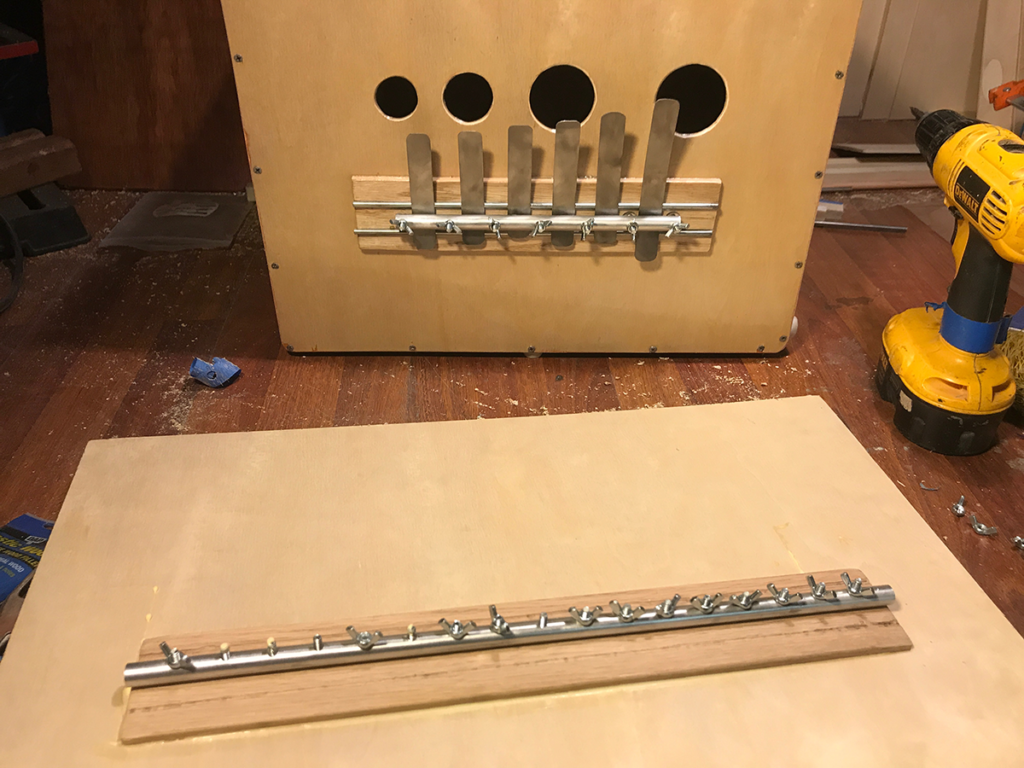
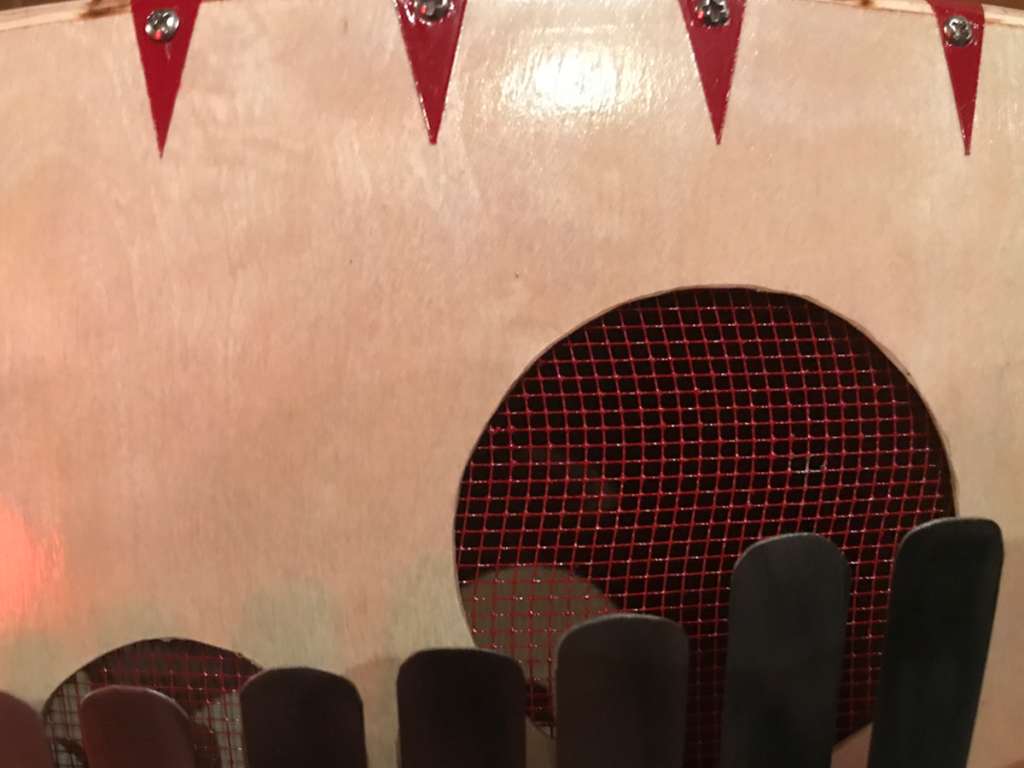
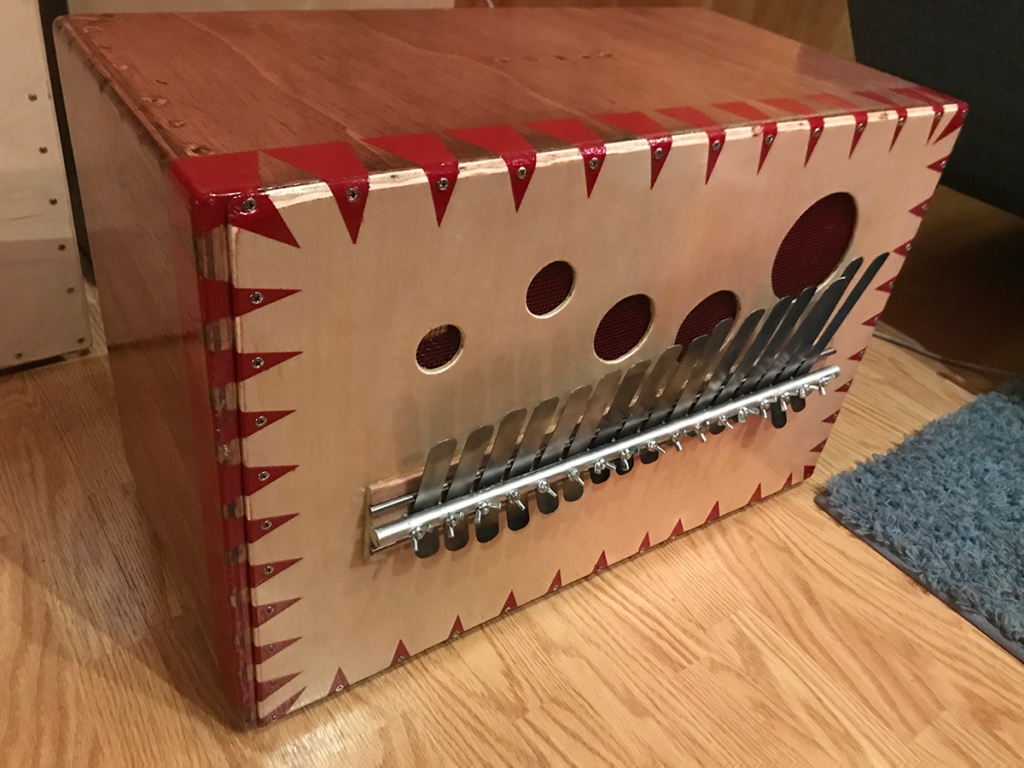
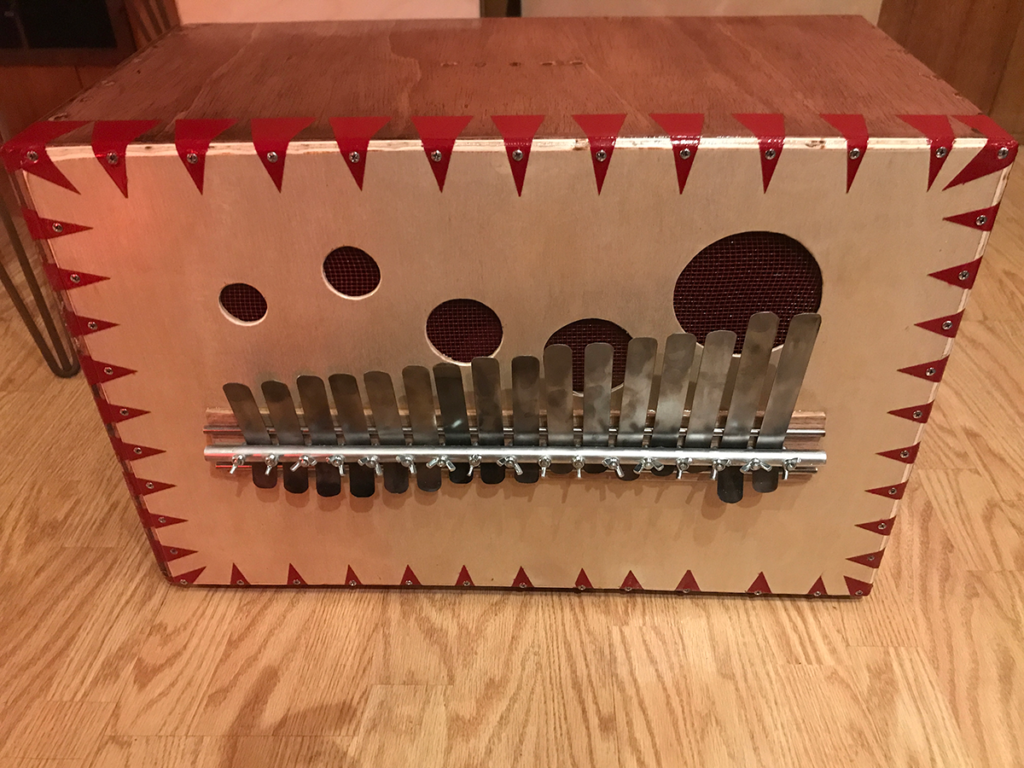
The marimbula is a Caribbean instrument, descended from the African kalimba, and generally functions as a bass. As you’ll see in the video at the bottom of the post, I first experimented with a 6-key marimbula built onto the back of one of my cajons, just to figure out the basics of construction.

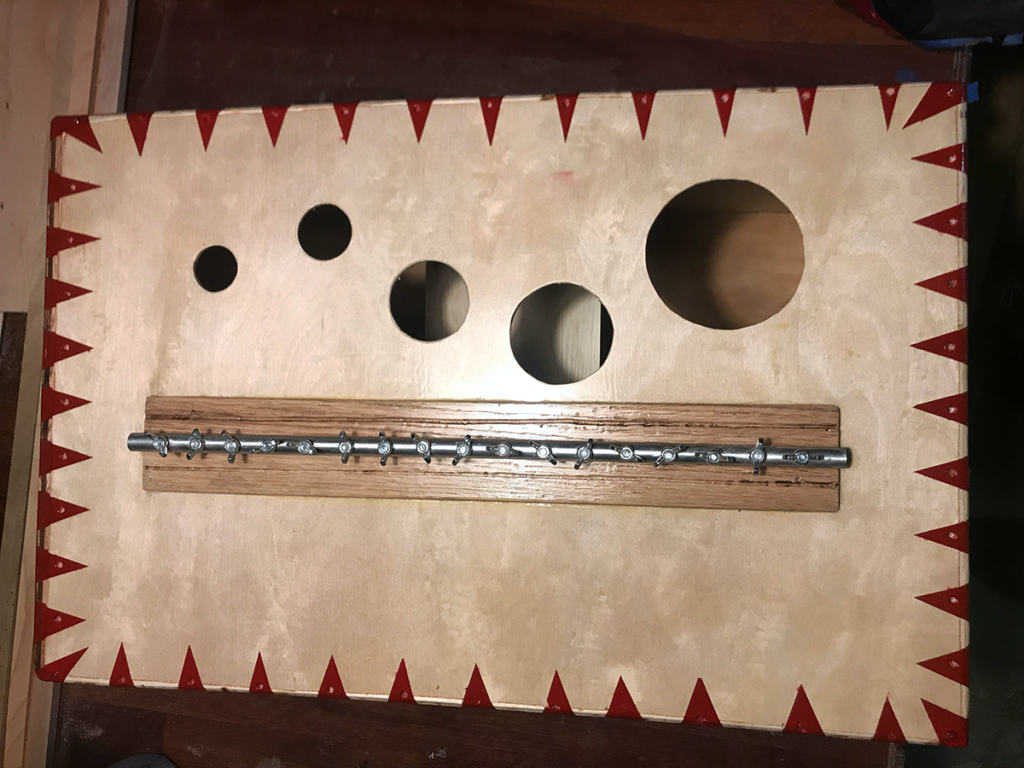
This one is a 16-key marimbula – which I’ve decided has about three too many bottom-end keys and perhaps one too many high-end keys, as the sound quality falls off quite a bit at the ends of its scale. Next, I might try building one like a piano keyboard (with two layers of keys in white and black) centered in the middle of this scale.

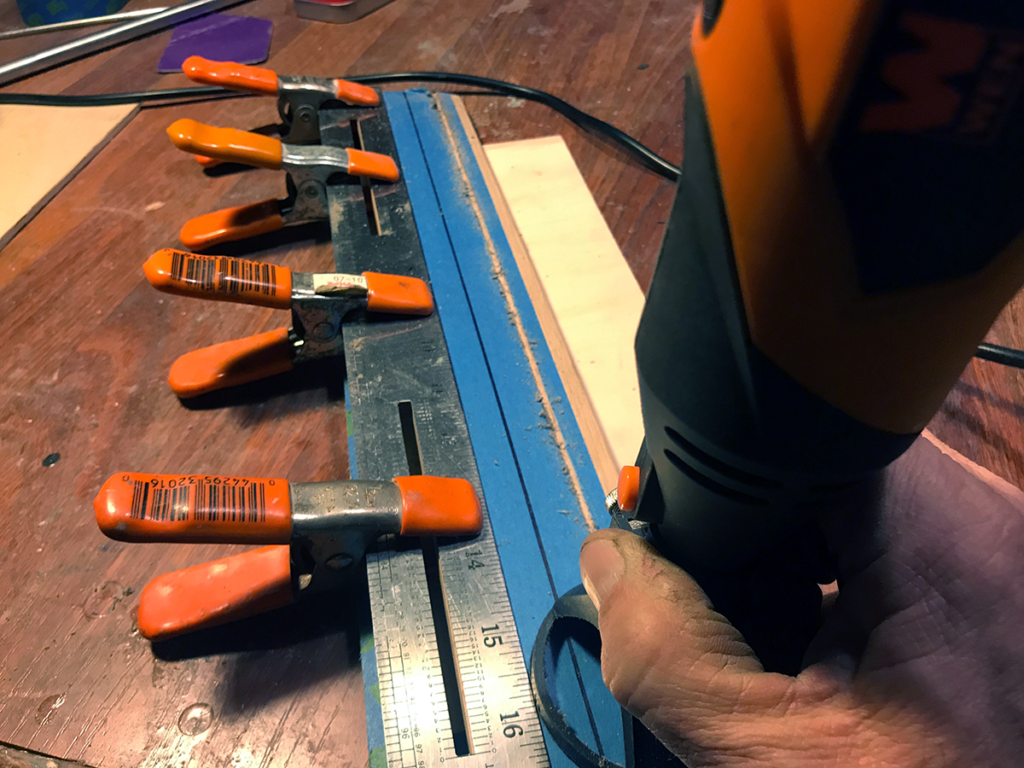
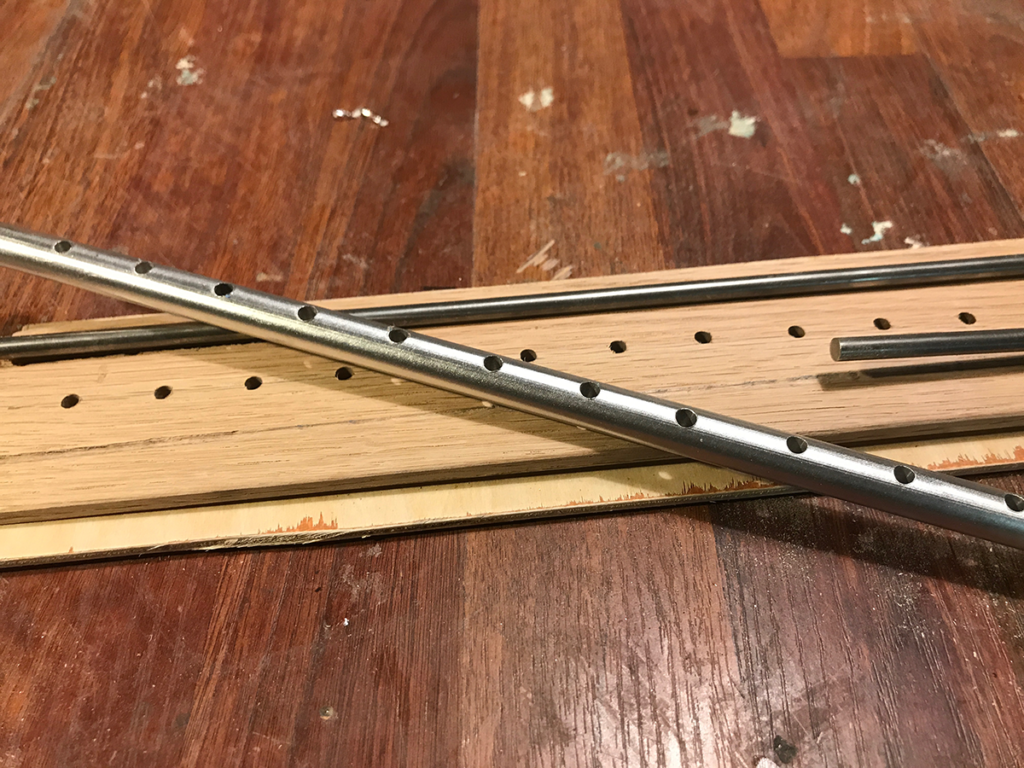
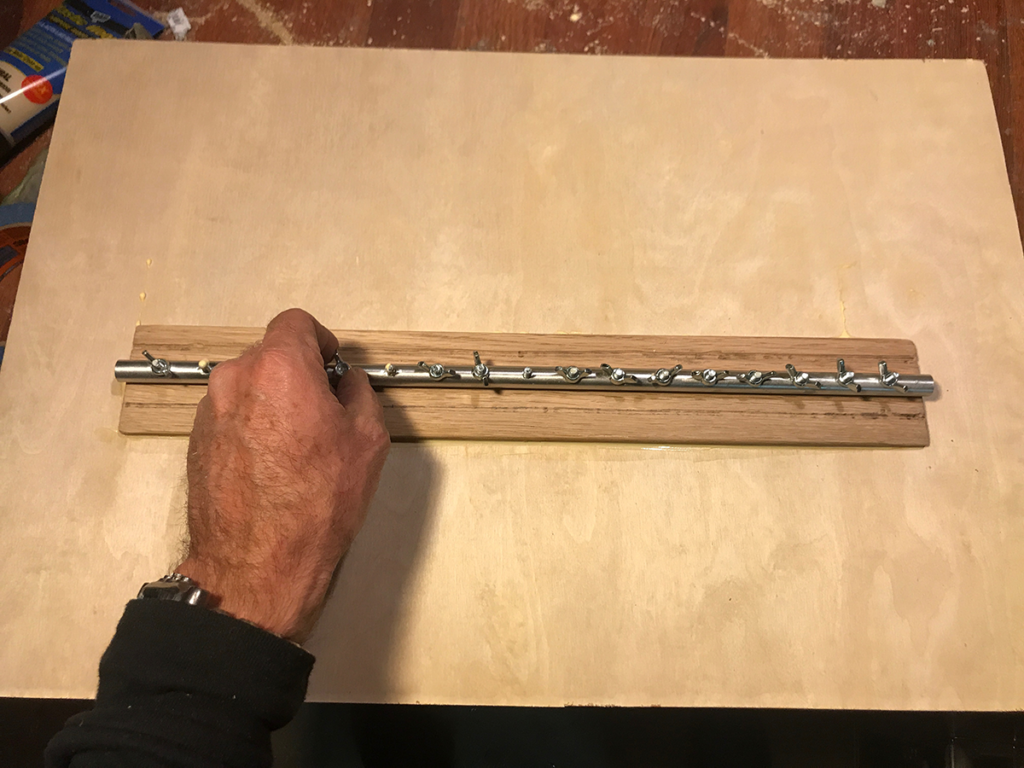
The tuning has been kinda challenging – I finally settled on D – but I’m tuning it slowly by ear because the digital tuning apps can’t handle all the overtones it puts out. Anyway, it’s a helluva lot of fun to play – particularly on a nice, resonant wood floor – because it’s easy to play, and the notes send vibrations through your butt and up your spine. I take great satisfaction in building instruments that create physical joy along with pleasant music.